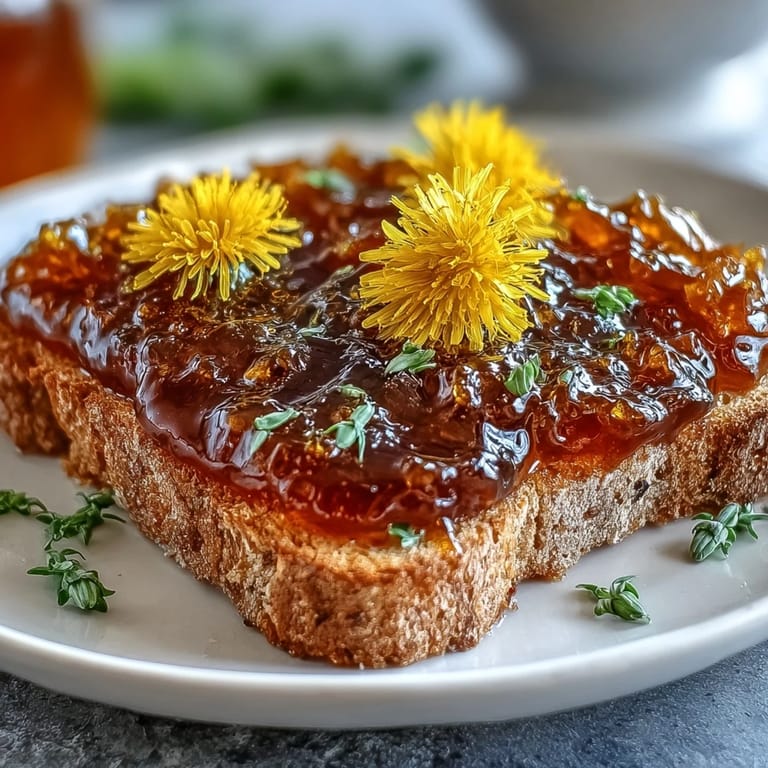
 Save
Save The first time this golden jelly shimmered in my kitchen, I remember how unexpectedly floral the steam smelled: sweet but not cloying, and almost like a sunny meadow after rain. It started with an idle curiosity while walking past a patch of dandelions on the sidewalk—what if their petals could transform into something edible and whimsical? Watching the bright yellow flowers pile up in my bowl felt oddly satisfying, as if gathering sunshine itself. I’d never imagined making a preserve from weeds, but my hands were sticky with pollen, and I was grinning. Even the process made me slow down and appreciate every step, from picking to jar-filling, as my kitchen bloomed with new aromas.
I once made a batch for a small brunch gathering, and everyone was puzzled but intrigued when I introduced my 'dandelion creation.' It was a dusty afternoon, and while spreading the jelly, one friend commented that it looked like sunshine in a jar. People joked about eating weeds, but the spread disappeared quickly, and conversations turned to childhood memories of blowing dandelion fluff. That moment made the jelly feel like more than just a recipe—it was a conversation starter. The laughter over the oddity drew us closer than any fancy dessert could have.
Ingredients
- Dandelion Petals: Picking only the yellow petals (no green bits!) makes sure you get delicate flavor without bitterness—don't be afraid to spend time here.
- Water: Fresh cold water helps clean the petals and teases out their flavor for the 'tea' base.
- Lemon Juice: I use bottled if fresh isn't handy—this little kick keeps the jelly bright and well-balanced.
- Powdered Fruit Pectin: This is what sets the jelly; always whisk it in before adding sugar to avoid clumps.
- Granulated Sugar: Adds structure and shine; I've learned there's no shortcut here, the ratio matters for the set and sweetness.
Tired of Takeout? 🥡
Get 10 meals you can make faster than delivery arrives. Seriously.
One email. No spam. Unsubscribe anytime.
Instructions
- Gather and Prep Dandelion Petals:
- Spread the flowers on a clean towel and gently shake or rinse off any dust. Pinch just the yellow petals from each head—they should feel soft and slightly sticky before measuring.
- Steep and Strain for Dandelion Tea:
- Bring water to a simmer, add petals, then cover and steep off the heat; the aroma will fill your kitchen like warm grass. Strain patiently with cheesecloth or a sieve, squeezing gently—don’t rush, as the last drops carry the most flavor.
- Make the Jelly Base:
- Pour your dandelion tea into a large saucepan. Stir in lemon juice and pectin till dissolved, then listen for the pectin to melt as the mixture heats.
- Sweetening and Boiling:
- Dump all the sugar in at once; it’ll hiss and bubble vigorously. Stir constantly as the color turns golden, and let it boil hard for 1–2 minutes—watch for the froth to rise.
- Fill Jars and Final Processing:
- Ladle hot jelly into sterilized jars, leaving a quarter inch at the top—spills happen, but a funnel makes life easier. Wipe rims, put on lids tightly, and either process in a boiling water bath for five minutes or refrigerate right away for quick enjoyment.
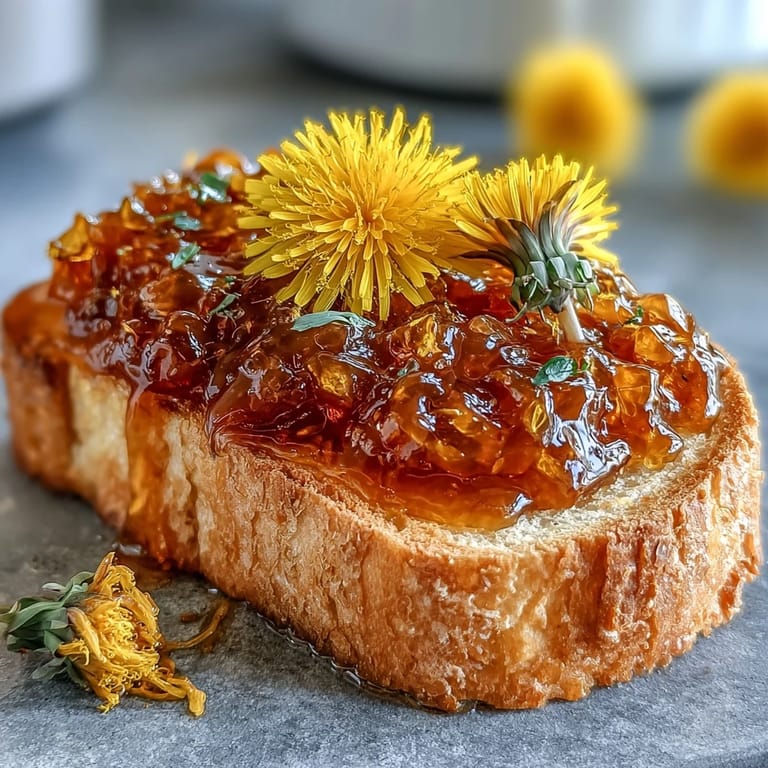 Save
Save There was a morning when I spread dandelion jelly over a still-warm scone, and suddenly it felt like the kitchen had shifted seasons—bright, mellow, and full of promise. Sharing this treat with my cousin turned a quiet breakfast into a small celebration, reminding me how simple ingredients can turn ordinary moments golden.
How I Hunt for Perfect Petals
On early spring mornings, I walk out with a basket and my tea mug to gather the freshest dandelions from the backyard. The best petals are plucked just after the dew dries but before the sun wilts them—a gentle twist pops the flower open, and a light shake gets rid of any tiny bugs. A neighbor once stopped to chat, asking if I was making wine; I smiled, jelly felt almost magical. Bringing the petals indoors always makes the kitchen feel earthy and alive.
How To Know When Your Jelly Has Set
An easy trick I use is to chill a spoon in the freezer, then drop a bit of jelly on it after boiling—if it wrinkles when nudged, it’s ready. If it runs, reboiling with a pinch more pectin fixes the problem. Watching the jelly transform from liquid to a silken sheet never gets old—there’s something quietly satisfying about that change.
Small Mishaps, Big Wins
During my first attempt, I forgot to sterilize one jar and the jelly was cloudy—now, cleanliness is habit. Even if the jelly seems loose after cooling, don’t panic; it will firm up by the next day. Sometimes, a tiny bit of foam remains on top; I learned it’s harmless and adds a rustic character.
- Always double check your flowers for bugs before bringing them inside.
- Straining with cheesecloth saves cleanup time over sieves.
- Let the jars cool on a towel; don’t touch until fully set for best clarity.
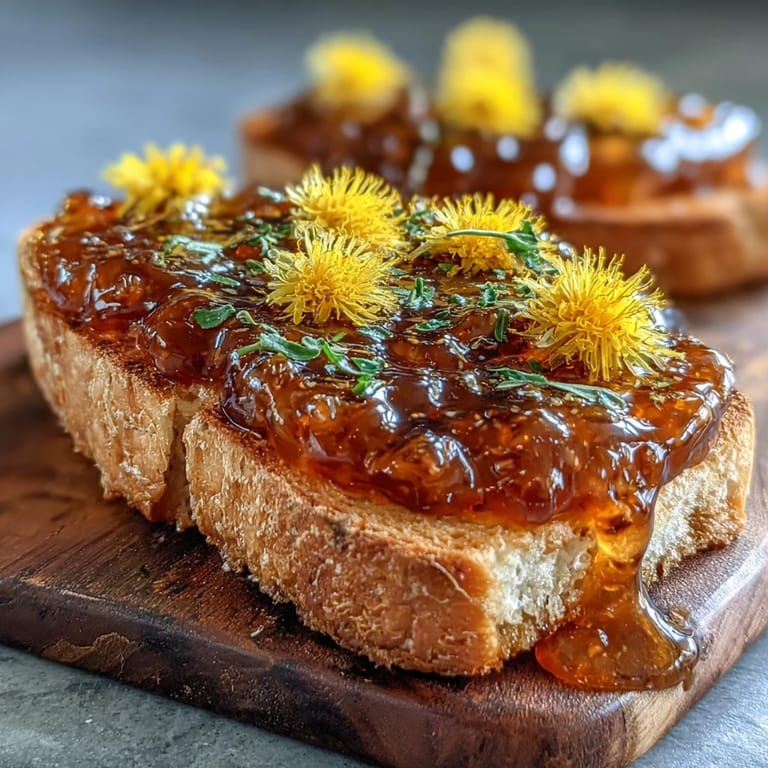 Save
Save If you try dandelion jelly once, I bet you’ll look at the flowers differently. It’s a simple way to capture spring in a jar, and every batch brings a little sunshine into the kitchen.
Recipe Questions & Answers
- → What kind of dandelion petals should I use?
Use fresh, pesticide-free yellow petals only. Avoid green parts as they taste bitter.
- → How long do I need to steep the petals?
Steep petals for at least 4 hours, or overnight for stronger flavor extraction.
- → Does the jelly taste like honey?
Yes, the floral notes give a honey-like taste, though it’s milder and subtly sweet.
- → Is this gluten-free and vegetarian?
Absolutely, this spread is both gluten-free and vegetarian by nature.
- → How should I store the jelly?
Store in sterilized jars for shelf-stability or refrigerate once opened for freshness.
- → Can I add other flavors?
Orange zest or additional citrus can add complexity to the finished jelly.