 Save
Save My son came home from school one afternoon and announced he was starving—not in that dramatic kid way, but genuinely depleted from field day activities. I had about fifteen minutes before we needed to leave for his soccer practice, so I grabbed whatever vegetables were in the crisper drawer and a container of hummus. Standing at the kitchen counter, I started arranging carrot sticks and snap peas into little mason jars, and something clicked: these weren't just snacks, they were little edible time capsules that could travel anywhere. He devoured them in the car, and suddenly I understood why portable snacking had become my secret weapon against the afternoon hunger spiral.
I've packed these cups for everything from hiking trips to office potlucks, and there's always that moment when someone opens the lid and says, 'Oh, I didn't expect this to actually look appealing.' That small win—making vegetables seem exciting instead of obligatory—never gets old, especially when someone reaches for a second cup.
Ingredients
- Hummus: The creamy foundation holds everything together, and whether you buy it or make your own, it's the reason people actually want to dip instead of complain.
- Carrot: Sweet, satisfying to crunch, and naturally sticks around without getting soggy if you keep them standing upright.
- Cucumber: Crisp and cooling, though if you're packing these for later, pat them extra dry since they release water over time.
- Red and yellow bell peppers: They add color that makes the cups look intentional, plus they're sweet enough to appeal to skeptical eaters.
- Snap peas: These are the sleeper hit—everyone eats them first because they're satisfying to bite and feel like a treat.
- Cherry tomatoes: Small enough not to intimidate, and the slight acidity balances the richness of hummus beautifully.
- Celery and jicama (optional): Celery adds earthiness if you go that route, while jicama brings an unexpected crunch that people always ask about.
Tired of Takeout? 🥡
Get 10 meals you can make faster than delivery arrives. Seriously.
One email. No spam. Unsubscribe anytime.
Instructions
- Wash and dry your vegetables:
- Give everything a good rinse and pat completely dry—moisture is the enemy of crispness when these sit in the fridge. This is the unglamorous step that makes all the difference.
- Cut with intention:
- Aim for sticks about the size of your pinky finger, thick enough to stand up without bending but thin enough to dip easily. A sharp knife makes this go faster and keeps the cuts clean instead of bruised.
- Portion the hummus:
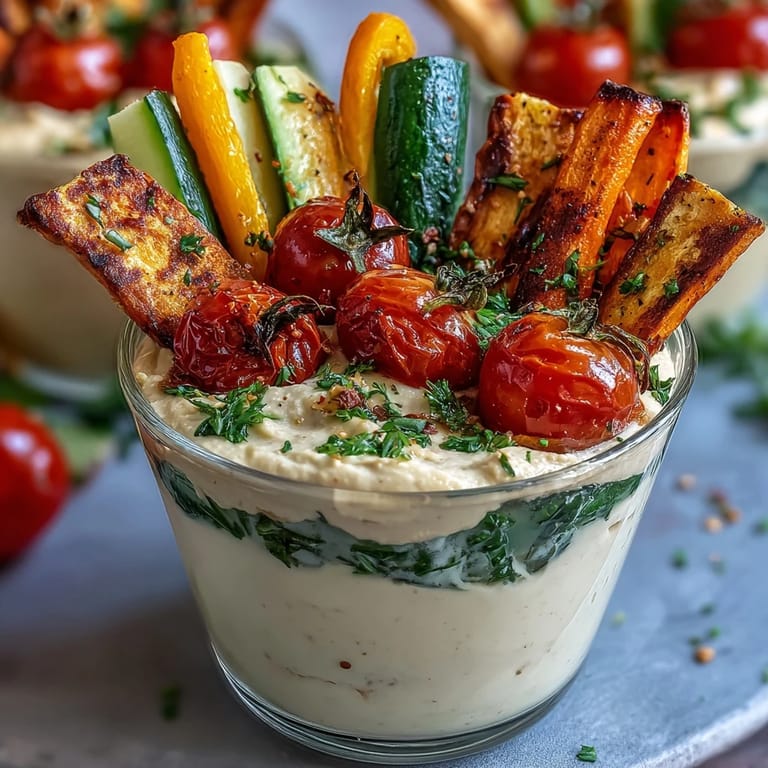
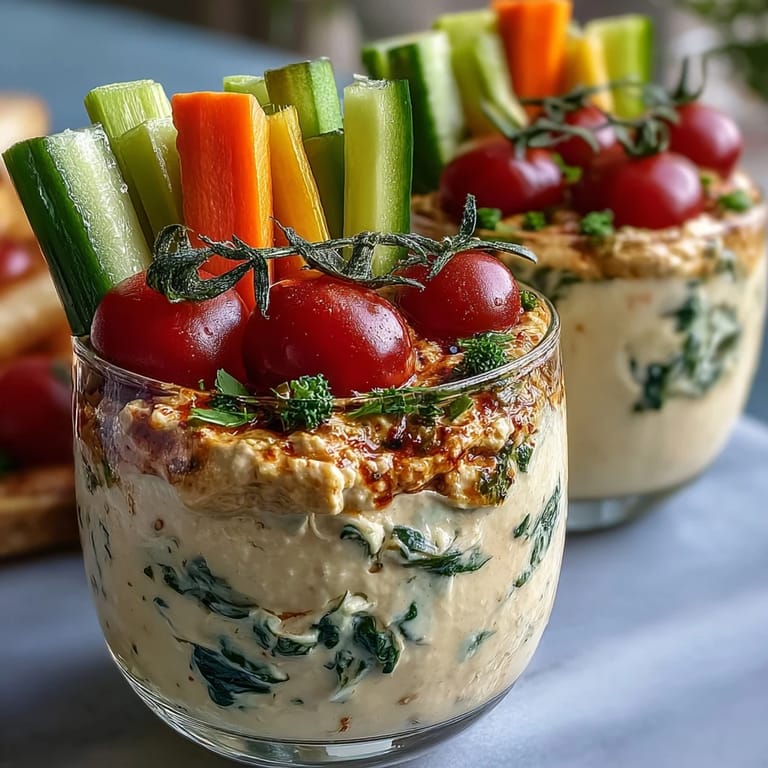
- Divide it evenly among your cups—about 1/4 cup per cup—and press it gently to the bottom so the vegetable sticks have something to lean against. Think of it less like filling a cup and more like building a little vegetable garden.
- Arrange with care:
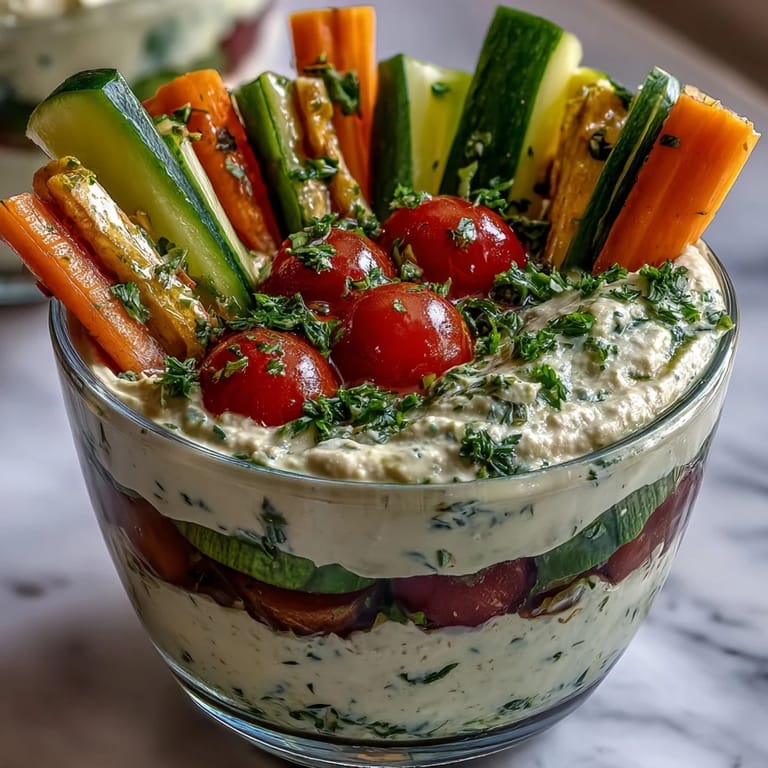
- Stand your vegetable sticks upright in the hummus like you're planting them, alternating colors and types so each cup looks balanced and inviting. This takes thirty seconds but completely changes how appealing they look when someone opens the lid.
- Chill and seal:
- Cover everything tightly and refrigerate until you're ready to go—they'll keep beautifully for two days, though they're best eaten within that window when the vegetables are still snappy.
 Save
Save There's something satisfying about handing someone a snack cup and watching their face shift from 'oh, vegetables' to genuinely reaching for a second one. My niece, who claimed to hate anything raw and crunchy, demolished three of these at a beach day and never mentioned her vegetables once—she was too busy enjoying the ritual of dipping and crunching to notice she was eating her greens.
Flavor Boosters That Make People Notice
If plain hummus feels too understated, spend thirty seconds sprinkling the top with paprika, sumac, or za'atar before you arrange the vegetables—it adds visual warmth and a flavor layer that makes people think you've done something more elaborate than you actually have. A light drizzle of olive oil catches the light and tastes rich, while everything still feels light and refreshing. Even crushed red pepper flakes work beautifully if you're feeling bold.
Seasonal Swap-Outs That Keep Things Interesting
Summer calls for the vegetables I've described, but winter opens the door to blanched green beans, thin radish slices, or raw broccoli florets that catch the hummus differently. Spring brings tender asparagus spears and snow peas, while fall is perfect for roasted (cooled) butternut squash sticks mixed in with your fresh options. Rotating with the seasons means these snack cups never feel repetitive, and you're constantly rediscovering why they work so well.
Storage and Travel Wisdom
These cups are forgiving when it comes to timing, but a few practical considerations make the difference between a snack that's still crisp at 3 PM and one that's started to wilt. Keep them toward the back of your fridge where it's coldest, and if you know they'll sit for longer than a day, consider keeping the hummus separate and adding it fresh right before packing. Transport them in an insulated lunch box with an ice pack if you're traveling more than a couple of hours, and don't worry if they get a little shaken up—just open the lid and give everything a quick shake to redistribute.
- Pat vegetables completely dry before assembling to prevent sogginess.
- Pack these in the coldest part of your cooler or fridge to maintain crispness.
- Assemble them up to two days ahead, but eat within that window for peak texture.
 Save
Save These little cups have become my go-to solution for that chaotic time between arriving home and needing to leave again, and somehow they've also become the thing people ask me to bring to gatherings. That's the real magic here: they look thoughtful without being complicated, and they make vegetables feel like the snack people want to reach for.
Recipe Questions & Answers
- → How do I keep the vegetables crisp in snack cups?
Wash and dry vegetables thoroughly before cutting, then store cups refrigerated to maintain freshness and crunch.
- → Can I use homemade hummus for these snack cups?
Yes, homemade hummus works wonderfully and allows you to adjust flavors to your preference.
- → What are good vegetable alternatives for these cups?
Try blanched green beans, radishes, broccoli florets, celery sticks, or jicama for varied textures and flavors.
- → How long can snack cups be stored before eating?
Keep refrigerated and consume within two days to ensure peak freshness and taste.
- → Can I add protein options to these cups?
Yes, adding baked tofu sticks or cheese cubes enhances protein content if dietary restrictions allow.