 Save
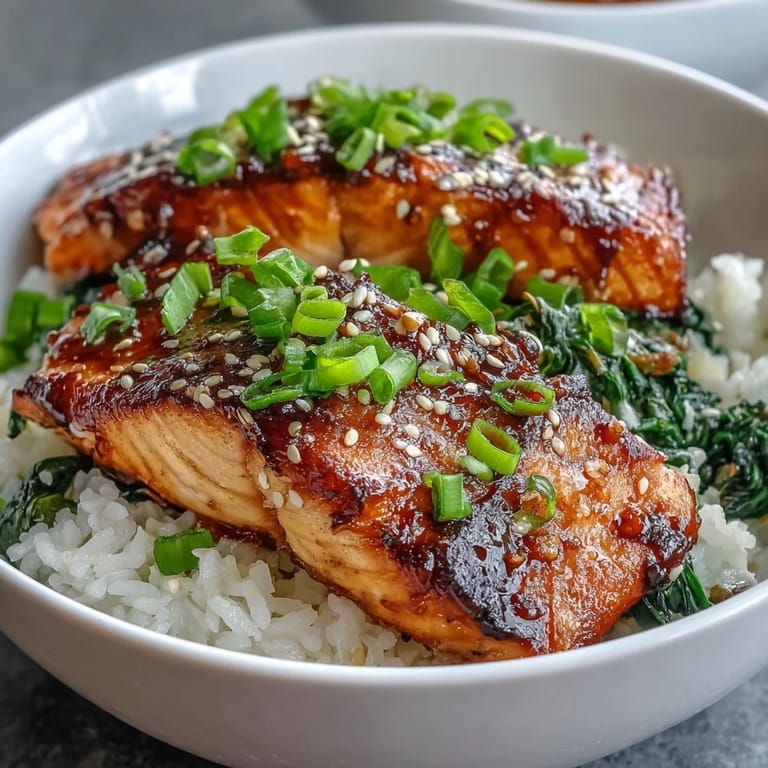
Save My cooking instructor once plated a miso glazed salmon bowl in front of our class, and the way that caramelized glaze caught the light made everyone lean forward at once. There's something about the umami depth of white miso combined with the sweetness of mirin that transforms a simple salmon fillet into something that feels both elegant and deeply comforting. I started making this at home on weeknights when I wanted something that tasted restaurant-quality but didn't require fussing around for hours. The balance of that savory-sweet glaze against the nutty jasmine rice and bright spinach just works, every single time.
Last spring I made this for my sister after she'd had a rough week at work, and watching her take that first bite of salmon with a spoonful of rice was like seeing her shoulders actually drop. She closed her eyes for a second and just said, 'Okay, this is what I needed.' That moment stuck with me more than any compliment ever could, because it reminded me that feeding people well is its own kind of kindness.
Ingredients
- Salmon fillets: Look for fillets that are bright pink and smell fresh like the ocean, not fishy; skinless makes plating cleaner.
- White miso paste: This is milder and slightly sweeter than red miso, giving the glaze its signature gentle umami without overwhelming heat.
- Mirin: This sweet rice wine is what creates that gorgeous caramelization, so don't skip it or substitute with sugar.
- Soy sauce: The backbone of the glaze; use tamari if you need it gluten-free.
- Honey: Adds just enough sweetness to balance the salty miso and soy.
- Rice vinegar: A touch of acidity that brightens the whole glaze and keeps it from being one-note.
- Toasted sesame oil: Drizzle this sparingly; its nutty aroma is what makes people ask what smells so good.
- Fresh ginger and garlic: These aren't optional if you want that warm, slightly spicy undertone in the glaze.
- Jasmine rice: Fragrant and delicate, it won't compete with the salmon; rinsing it removes excess starch for fluffier grains.
- Fresh spinach: Wilts down dramatically, so buy more than you think you'll need.
- Green onions and sesame seeds: These garnishes add texture and visual pop that make the bowl feel intentional.
Tired of Takeout? 🥡
Get 10 meals you can make faster than delivery arrives. Seriously.
One email. No spam. Unsubscribe anytime.
Instructions
- Mix the miso glaze:
- Whisk white miso, mirin, soy sauce, honey, rice vinegar, sesame oil, ginger, and garlic in a small bowl until completely smooth and the color turns a rich caramel brown. The warmth of your bowl helps the miso loosen up, so don't be afraid to whisk with confidence.
- Marinate the salmon:
- Lay salmon fillets in a shallow dish and pour the glaze over, making sure each piece gets fully coated. Slide it into the fridge for 15 to 30 minutes while you handle the other components, letting those flavors seep into the fish.
- Start the rice:
- Rinse jasmine rice under cold running water, swirling it gently until the water runs mostly clear, which removes the starchy coating. In a saucepan, combine the rinsed rice with three cups of water and a small pinch of salt, then bring it to a boil over high heat.
- Simmer and rest:
- Once boiling, lower the heat to the absolute minimum, cover the pan tightly, and let it steam for 12 to 15 minutes without peeking. Turn off the heat and let the covered rice sit for five more minutes, which sets the grains perfectly.
- Wilt the spinach:
- Heat vegetable oil in a large skillet over medium heat, then add minced ginger and garlic, stirring for about 30 seconds until the kitchen fills with that fragrant warmth. Add the fresh spinach in handfuls, tossing it with tongs as it collapses, then finish with a pinch of salt and one teaspoon of soy sauce.
- Broil the glazed salmon:
- Preheat your broiler or oven to 220°C (425°F) and line a baking sheet with foil, lightly oiling it so nothing sticks. Arrange the marinated salmon skin-side down on the tray and slide it under the broiler for 8 to 10 minutes, watching as the glaze darkens and the edges of the fillets turn opaque.
- Build the bowls:
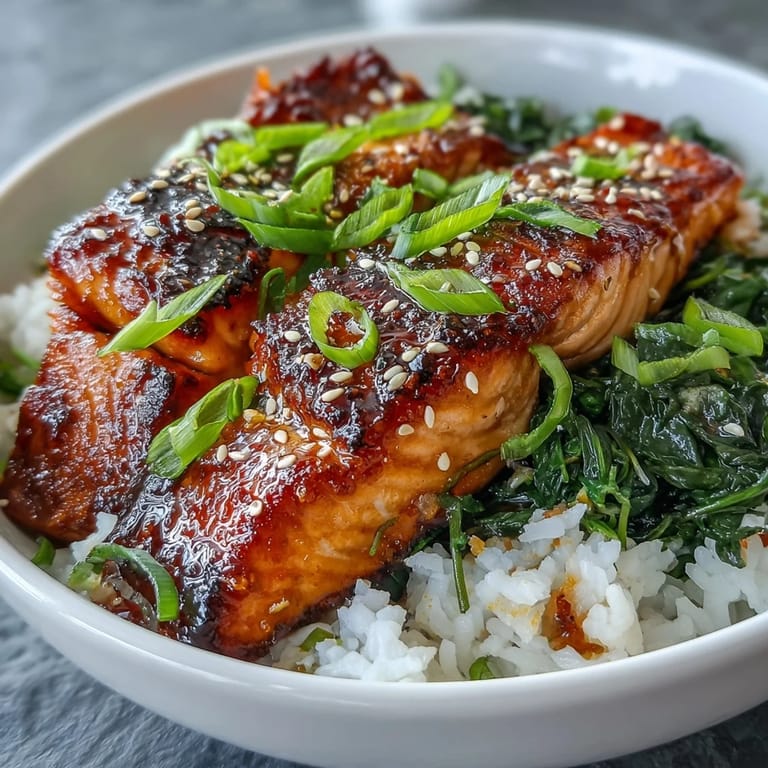
- Divide the fluffy jasmine rice among four bowls, creating a warm base for each one. Top each portion of rice with a generous handful of sautéed spinach and carefully place a glazed salmon fillet on top, then scatter green onions and toasted sesame seeds across the surface.
 Save
Save There's a quiet magic in assembling these bowls, the way the steam rises off the warm rice and the glossy salmon catches the light. It's the kind of dish that reminds you cooking doesn't have to be complicated to feel genuinely special.
The Miso Glaze Secret
The real trick I discovered after making this dozens of times is that white miso paste should be whisked in gradually rather than dumped all at once, which prevents lumps and ensures it blends smoothly with the other liquid ingredients. When you see that glaze turn from cloudy to glossy and caramel-colored, you know you've nailed it. I also learned that if your glaze tastes too salty, a tiny squeeze of honey balances it out better than adding more mirin.
Timing and Temperature Matter
One evening I got impatient and skipped marinating entirely, and the difference was immediately noticeable once I tasted it. The salmon was good, but it lacked that deep, savory flavor that makes you want another bite. Temperature-wise, the broiler is your friend here because it creates that beautiful caramelized crust while keeping the inside of the salmon tender and buttery. If your oven runs hot, start checking around the seven-minute mark to avoid accidentally drying out the fillets.
Make It Your Own
What makes this bowl so approachable is how flexible it truly is without losing its soul, whether you're adapting for dietary needs or just working with what's in your kitchen. Swap the jasmine rice for brown rice or quinoa if you want more fiber, or substitute the spinach with bok choy or broccoli rabe for a slight textural change. The miso glaze is the star that holds everything together, so as long as that stays consistent, you're free to play with the supporting players.
- Try adding sliced avocado or pickled ginger on top for extra creaminess and brightness.
- A handful of edamame scattered across the bowl adds protein and a pop of color.
- Squeeze fresh lime over everything right before eating to wake up all the flavors.
 Save
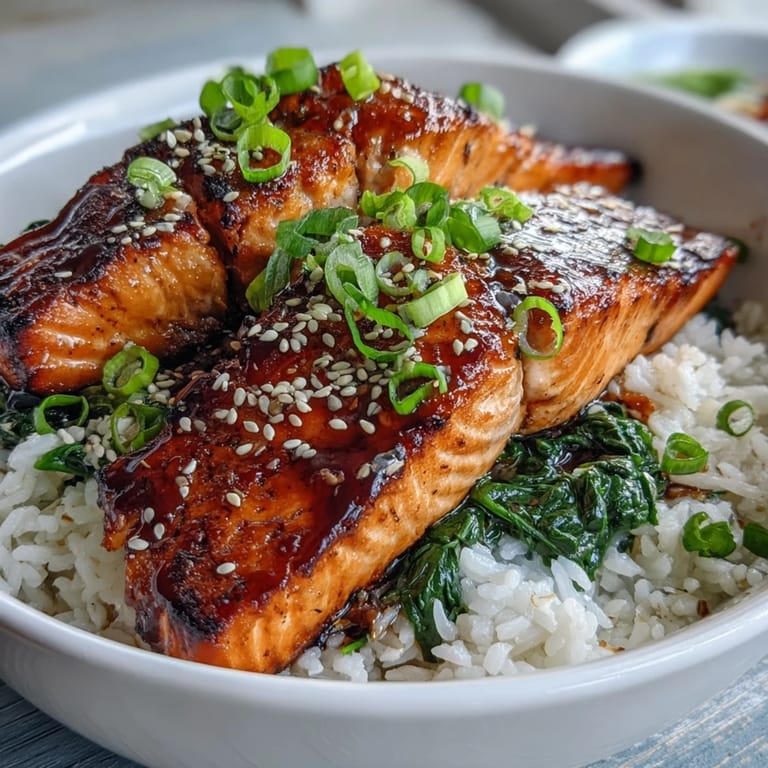
Save This miso glazed salmon bowl has become my answer to the question of what to cook when I want something that feels thoughtful but doesn't demand too much of my energy. It's the kind of dish that bridges the gap between everyday dinner and something worth celebrating.
Recipe Questions & Answers
- → What does miso glaze taste like?
White miso creates a savory-sweet glaze with deep umami notes. Combined with mirin and honey, it caramelizes beautifully while adding rich depth to the salmon's natural flavor.
- → Can I use other fish varieties?
Yes, this glaze works wonderfully with black cod, sea bass, or trout. Adjust cooking time based on fillet thickness, ensuring the fish reaches proper doneness.
- → How long should I marinate the salmon?
Marinate for 15-30 minutes for optimal flavor absorption. Longer marinating up to 2 hours enhances the taste, but avoid exceeding 4 hours as the salt content may affect texture.
- → Is this suitable for meal prep?
Absolutely. Cook components separately and store in airtight containers for up to 3 days. Reheat salmon gently to maintain moisture, and refresh spinach with a quick sauté before serving.
- → Can I make this gluten-free?
Yes, substitute regular soy sauce with gluten-free tamari and verify your miso paste is certified gluten-free. All other ingredients naturally fit gluten-free dietary requirements.
- → What wine pairs well with this bowl?
A crisp dry white wine like Sauvignon Blanc or Pinot Grigio complements the miso's richness. Cold sake also provides an authentic pairing that enhances the Japanese-inspired flavors.