 Save
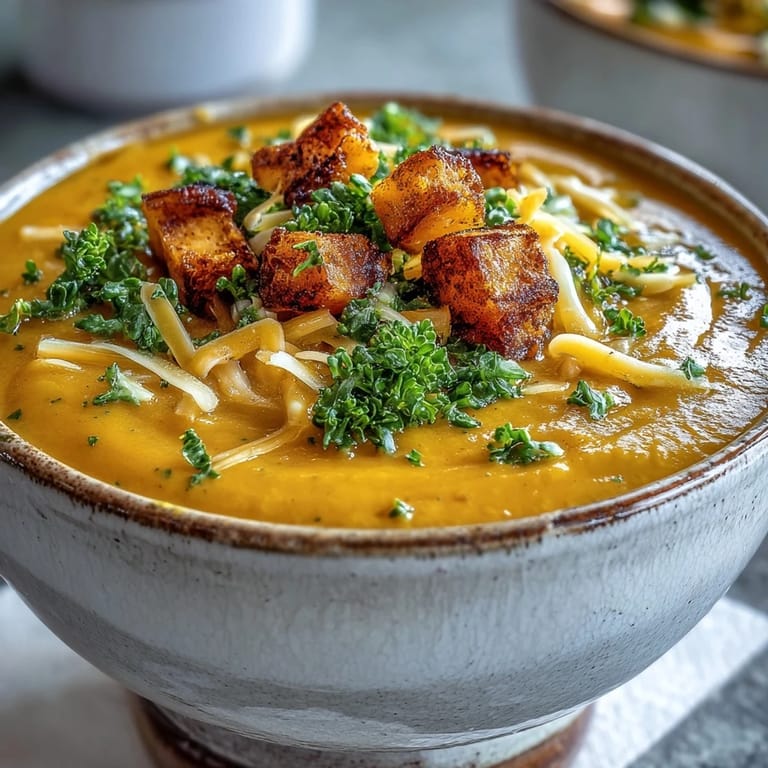
Save My kitchen smelled like caramelized squash and toasted garlic on the afternoon I first made this soup, and I knew immediately it would become a regular rotation. There's something about roasting vegetables until their edges turn golden that transforms what could be ordinary into something worth repeating. The sharp cheddar stirred in at the end was my nod to the creamy soups I'd order at cafes, except this version felt more honest, more mine. It's the kind of dish that makes your kitchen feel warm even on gray days.
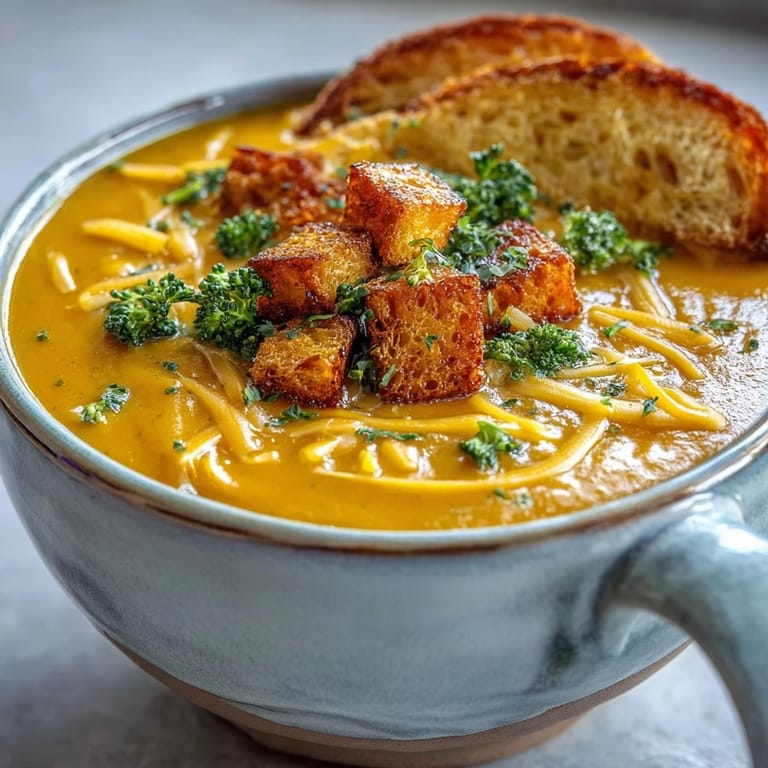
I made this for my neighbor last October when she'd mentioned craving something warming but not heavy. She arrived with a fresh baguette, and we sat at my kitchen table with steaming bowls while rain tapped against the window. She asked for the recipe before she'd finished her first bite, and that's when I knew I'd stumbled onto something special—the kind of soup that quietly works its way into people's regular cooking rotation.
Ingredients
- Butternut squash: One medium squash (about 2 lbs), peeled, seeded, and cubed—the roasting brings out natural sweetness that balances the sharp cheese beautifully.
- Broccoli: One large head (about 12 oz), cut into florets—roasting it until the tips crisp up adds texture and prevents the soup from feeling one-note.
- Yellow onion: One medium onion, diced—the aromatic base that gets sweet and mellow as it cooks.
- Garlic: Two cloves, minced—add this after the onion softens so it doesn't burn and turn bitter.
- Olive oil: Two tablespoons for roasting, which helps the vegetables brown and develop flavor.
- Vegetable broth: Four cups of good quality broth makes a real difference in the final taste.
- Whole milk: One cup (or plant-based milk as a substitute)—adds creaminess without overwhelming the vegetable flavors.
- Water: One cup—helps adjust the consistency and prevents the soup from tasting too concentrated.
- Sharp cheddar cheese: One and a half cups, shredded—sharp varieties give a more interesting flavor than mild cheddar.
- Unsalted butter: Two tablespoons for sautéing the aromatics and building flavor.
- Smoked paprika: Half a teaspoon—adds a subtle smoky note that deepens the overall taste without being obvious.
- Black pepper: Half a teaspoon, plus more to taste.
- Salt: One teaspoon, adjustable—always taste near the end before adding more.
- Cayenne pepper: A pinch optional—only if you like a gentle heat that builds at the back of your throat.
Tired of Takeout? 🥡
Get 10 meals you can make faster than delivery arrives. Seriously.
One email. No spam. Unsubscribe anytime.
Instructions
- Heat your oven and prep:
- Preheat your oven to 425°F and line a baking sheet with parchment paper. This small step prevents sticking and makes cleanup easier than you'd think.
- Season and roast the vegetables:
- Toss your cubed butternut squash and broccoli florets with olive oil, salt, and black pepper, spreading them in a single layer on the sheet. Roast for 25 to 30 minutes, stirring once halfway through—you're looking for that moment when the edges turn caramelized and the broccoli tips darken slightly.
- Build the base:
- While vegetables roast, melt butter in a large pot over medium heat and add your diced onion, cooking until it turns translucent and sweet, about 4 to 5 minutes. Add minced garlic for the last minute, stirring constantly so it releases its aroma without burning.
- Combine and simmer:
- Add the roasted squash and broccoli to the pot along with vegetable broth, water, smoked paprika, and cayenne if using. Bring to a gentle simmer and let it bubble softly for 10 minutes so the flavors get to know each other.
- Blend until smooth:
- Use an immersion blender to puree the soup directly in the pot, working in batches if you prefer a blender—you're aiming for a velvety texture with no chunks. The immersion blender is faster and means fewer dishes.
- Finish with cheese:
- Stir in the milk and shredded cheddar cheese, heating gently until the cheese melts completely. Never let this step boil or the cheese can become grainy and separate from the liquid.
- Taste and serve:
- Season to your preference with salt and pepper, then ladle into bowls and serve hot. A squeeze of lemon juice before eating adds a brightness that surprised me the first time I tried it.
 Save
Save The moment that made me love this soup came on a Tuesday when my teenager came home exhausted from exams and barely spoke until the second spoonful. Watching someone find comfort in something you made with your own hands is a quiet kind of magic that never gets old.
Why Roasting Changes Everything
Raw vegetables steamed in broth taste like the effort you put in—minimal and forgettable. But roasting caramelizes the natural sugars in the butternut squash and creates crispy, charred edges on the broccoli that add complexity and depth. The transformation happens at high heat, around 425°F, where the vegetables become slightly shrunken, deeply colored, and infinitely more interesting than their raw selves. This is the difference between a soup you make because you need dinner and one you actually look forward to.
The Sharp Cheddar Secret
I learned early on that mild cheddar disappears into the background of this soup, leaving you with a creamy texture but no personality. Sharp cheddar, on the other hand, announces itself—it adds tanginess and richness simultaneously, making the soup taste more intentional. The key is using freshly shredded cheese from a block rather than pre-shredded, which contains anti-caking agents that prevent smooth melting. The difference is noticeable enough that anyone eating this soup will feel like something special went into making it.
Making It Your Own
This recipe serves as a template rather than a strict instruction, which is exactly how the best cooking happens. I've made it with half-and-half instead of milk when I wanted something richer, and I've added roasted garlic when I was feeling ambitious. Once you understand the basic structure—roasted vegetables, aromatics, broth, cheese—you can adjust the seasonings, add herbs like thyme or sage, or even swap the broccoli for cauliflower on weeks when that's what your market had.
- A drizzle of truffle oil on top makes this taste restaurant-worthy for special dinners.
- Crispy bacon bits or crumbled sage add textural contrast that keeps each spoonful interesting.
- Leftovers freeze beautifully, though the texture is best within three months of freezing.
 Save
Save This soup has become my go-to when I want something nourishing without the fussiness, and it's proven itself countless times over. Make it once and you'll understand why it keeps showing up on tables through autumn and into winter.
Recipe Questions & Answers
- → Can I make this soup dairy-free?
Yes, substitute whole milk with plant-based milk like almond or oat milk, and use vegan cheddar cheese instead of regular cheddar for a completely dairy-free version.
- → Can I use frozen broccoli instead of fresh?
Fresh broccoli works best for roasting to develop deeper flavors, but you can use frozen broccoli florets. Thaw and pat dry before roasting to ensure proper caramelization.
- → How do I store leftover soup?
Store in an airtight container in the refrigerator for up to 4 days. Reheat gently on the stovetop over low heat, stirring occasionally. Add a splash of broth or milk if the soup thickens.
- → Can I freeze this soup?
Yes, this soup freezes well for up to 3 months. Cool completely before transferring to freezer-safe containers. Thaw overnight in the refrigerator and reheat gently, stirring in extra cheese if needed.
- → What can I use instead of an immersion blender?
Transfer the soup in batches to a countertop blender, filling only halfway to avoid overflow. Blend until smooth, then return to the pot. A food processor also works but may require more batches.
- → How can I make the soup thicker?
Reduce the amount of liquid by 1/2 cup, or add an extra cup of roasted butternut squash. You can also simmer the soup longer to evaporate excess liquid, or stir in a tablespoon of cornstarch mixed with cold water.