 Save
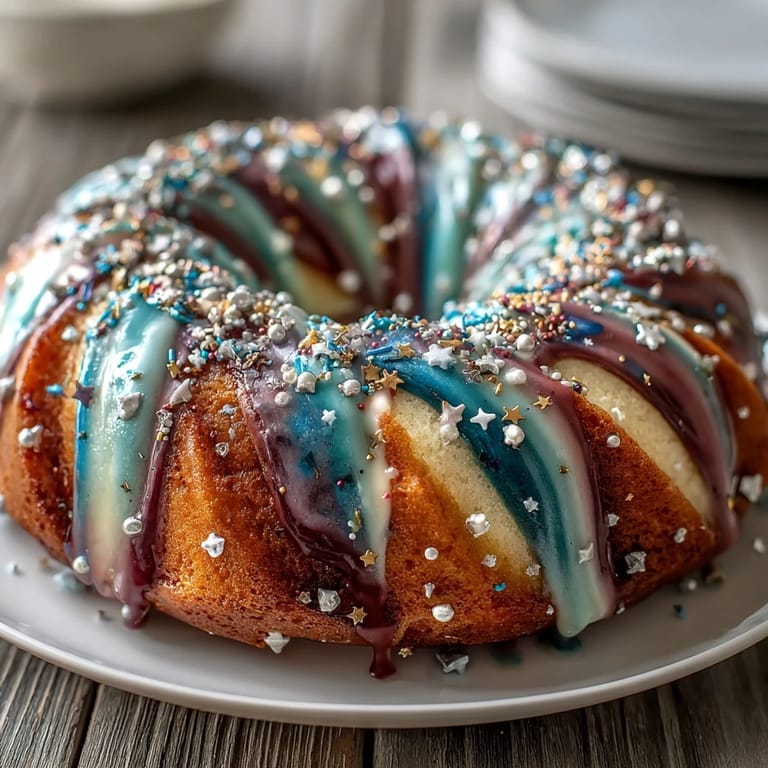
Save My cousin texted me three months before her graduation asking if I could bake something special, and honestly, my first instinct was to suggest the usual sheet cake. But then she said she wanted it to feel like her—bold, colorful, a little bit magical. That's when I thought about the night sky, and how graduation is really about reaching for the stars. This galaxy cake became our inside joke, her launching pad dessert, and now I make it whenever someone needs reminding that they're capable of extraordinary things.
I'll never forget my cousin's face when I pulled this cake out of the car at her graduation party. Her friends circled it like it was an artifact, taking photos before anyone even cut a slice, and someone said it was too pretty to eat—which lasted about ninety seconds. Watching people light up when they realized the whole thing was homemade, not ordered from some fancy bakery, reminded me why I love baking for celebrations.
Ingredients
- All-purpose flour (2 ½ cups): Room temperature flour measures more accurately, so spoon and level rather than scooping straight from the bag.
- Granulated sugar (2 cups): This sweetens without overwhelming the vanilla flavor—don't skip the creaming step, as it's what makes the cake tender.
- Unsalted butter (1 cup plus 1 ½ cups for buttercream): Cold butter won't incorporate properly, so set it out an hour before you start.
- Eggs (4 large): Room temperature eggs blend smoothly into the batter, creating a finer crumb.
- Whole milk (1 cup plus ¼ cup for buttercream): Room temperature milk prevents the batter from seizing up when combined with warm butter.
- Baking powder (2 ½ tsp): This is your lift—too much and the cake peaks and cracks, too little and it stays dense.
- Salt (½ tsp): It doesn't taste salty, it just makes the vanilla taste more like itself.
- Vanilla extract (1 tbsp plus 2 tsp): Use real vanilla if you can—it's the backbone of this cake's flavor.
- Powdered sugar (5 cups, sifted): Sift it or press it through a fine mesh strainer to avoid lumps that will refuse to blend into the buttercream.
- Gel food coloring (black, navy blue, purple, pink, teal): Gel holds color better than liquid, so you won't end up with a watery frosting.
- Edible stars and glitter: These are what turn a pretty cake into a galaxy moment.
Tired of Takeout? 🥡
Get 10 meals you can make faster than delivery arrives. Seriously.
One email. No spam. Unsubscribe anytime.
Instructions
- Prepare your pans:
- Preheat the oven to 350°F and grease three 8-inch round pans thoroughly before lining them with parchment paper. This double layer keeps your cake layers from sticking and ensures clean, even edges.
- Cream butter and sugar:
- Beat the softened butter and sugar together for 3 to 4 minutes until the mixture is pale and fluffy—this aerates the batter and creates that tender crumb you're after. You'll know it's ready when it looks almost mousse-like.
- Incorporate eggs one at a time:
- Add each egg individually and beat well between additions so the mixture stays emulsified and smooth. If it looks slightly curdled, don't panic—it'll smooth out once the dry ingredients go in.
- Combine wet and dry ingredients alternately:
- Begin with flour, then milk, then flour again, always ending with flour to seal in the moisture. Mix on low speed and stop as soon as everything just comes together—overmixing develops gluten and toughens the cake.
- Divide batter and bake:
- Pour the batter evenly into your prepared pans and bake for 30 to 35 minutes until a toothpick inserted in the center comes out clean or with just a few moist crumbs. The tops should spring back lightly when you touch them.
- Cool the cakes properly:
- Let them sit in their pans for 10 minutes so they set slightly, then turn them out onto wire racks to cool completely. Trying to frost a warm cake is an exercise in frustration, so patience here pays off.
- Make the galaxy buttercream:
- Beat the softened butter until it's creamy and pale, then add sifted powdered sugar gradually so you don't create a cloud of sugar dust in your kitchen. Once combined, add milk and vanilla and beat until fluffy and spreadable.
- Divide and tint the buttercream:
- Split the buttercream into separate bowls and add a few drops of gel coloring to each, stirring until you get those deep galaxy shades. The black and navy will take longer to develop color than the purples and teals.
- Create the color log:
- Place random spoonfuls of each colored buttercream onto plastic wrap, then roll it up tightly to form a log. This technique ensures every piping motion creates that marbled, swirled galaxy effect rather than looking striped.
- Layer and crumb coat:
- Place the first cake layer on your serving plate, spread a thin layer of galaxy buttercream, and repeat with the remaining layers. Apply a thin crumb coat all over and chill for 20 minutes so loose crumbs don't drag across your final frosting.
- Pipe the galaxy design:
- Transfer your color log to a piping bag with a large round tip and pipe swirls across the chilled cake, then gently blend them with an offset spatula. Work in sections so you have time to blend before the frosting sets.
- Add the stars and sparkle:
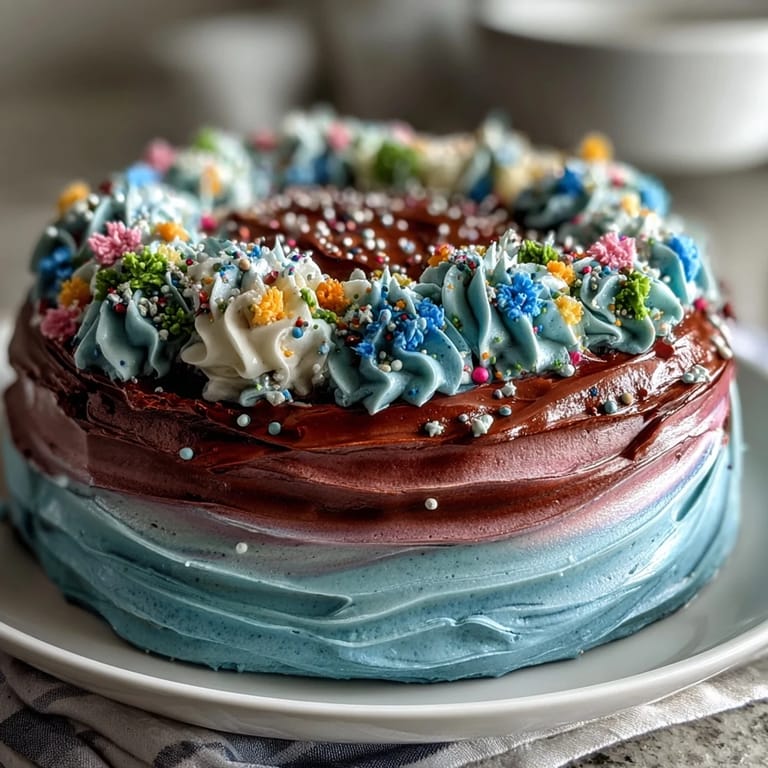
- Use white gel coloring with a food-safe paintbrush or splatter tool to flick stars across the surface, then shower the whole thing with edible gold and silver stars and a dusting of edible glitter. This is where the magic happens—don't be shy.
 Save
Save A week after the graduation party, my cousin sent me a photo of herself in cap and gown standing next to a leftover slice of cake she'd saved. She wrote, 'This tasted even better than it looked, which I didn't think was possible.' That's when I realized this cake had become part of her memory of that day, something she made sure to hold onto.
Why Gel Coloring Changes Everything
The first time I made this cake, I grabbed liquid food coloring from my pantry thinking it would work just fine. By the time I'd tinted the buttercream navy blue, it was noticeably looser and wouldn't hold peaks in the piping bag. I learned the hard way that gel coloring is concentrated and won't alter your frosting's consistency, while liquid coloring is mostly water. Now I keep a small bottle of each gel color on hand because the difference between a beautiful galaxy and a muddy puddle of frosting is literally just the type of coloring you use.
Leveling and Layering Like You Mean It
Uneven cake layers will make your galaxy lopsided and frustrating to frost, so take ten seconds to trim the domed tops flat using a serrated knife or cake leveler. I learned this after my first attempt tilted noticeably to one side, and I spent the frosting stage trying to compensate with thicker buttercream on the low side. A simple trim makes assembly smooth and gives you a professional-looking finish without any extra effort.
The Splatter Technique and Other Galaxy Secrets
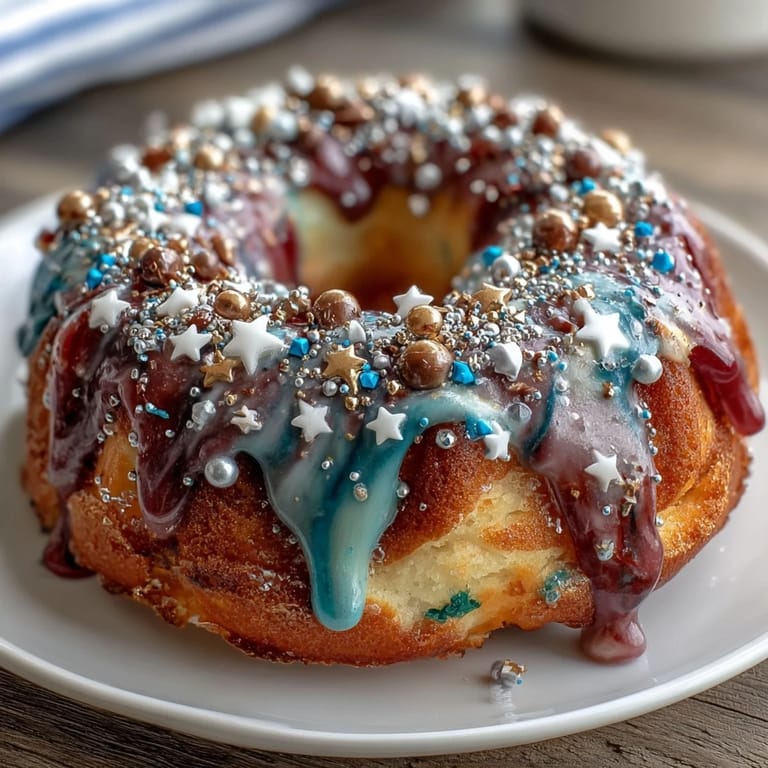
If you don't have a food-safe splatter tool, a stiff brush dipped in white gel coloring works just as well—just flick it toward the cake with a quick wrist motion and watch the stars appear. The key is not to overthink it; the more natural and random your stars, the more the cake looks like an actual night sky rather than a calculated pattern. A few last-minute details that make the difference between something pretty and something guests actually remember:
- Add edible stars in clusters rather than scattered evenly so it feels intentional and celestial.
- Let a little white gel coloring puddle on the plate around the cake's base for that floating-in-space effect.
- If you're making this the day before, store it in a cool room rather than the fridge so the buttercream stays soft and the layers don't dry out.
 Save
Save This cake isn't just a celebration of one person's achievement—it's a reminder that taking time to make something beautiful for someone you care about is its own kind of success. Bake it for graduations, yes, but also for job promotions, new apartments, and anyone reaching for their own stars.
Recipe Questions & Answers
- → How is the galaxy effect achieved on this cake?
The galaxy effect is created by using gel food coloring in various shades blended into the buttercream, then swirled together with an offset spatula to mimic a marbled cosmic pattern.
- → What decorations are used to enhance the celestial theme?
Edible gold and silver star sprinkles along with edible glitter or luster dust are applied to simulate stars and add shimmer across the cake surface.
- → Can the cake be paired with other flavors?
Yes, adding a layer of raspberry or blueberry jam between the cake layers introduces a fruity note that complements the sweet buttercream beautifully.
- → What tools are needed to decorate the cake effectively?
Essential tools include piping bags, an offset spatula for smoothing, and a food-safe paintbrush or splatter tool to flick on the white gel coloring for star details.
- → Is this cake suitable for specific dietary preferences?
This version caters to vegetarian preferences but contains gluten, eggs, and dairy. Star sprinkles may contain traces of nuts, so checking allergen info is recommended.