 Save
Save My neighbor knocked on my door one Tuesday evening with a jar of pure maple syrup from her farm upstate, insisting I needed to do something more interesting with it than pancakes. That night, I glazed salmon with it on a whim, combining it with soy sauce and ginger from my pantry, and the result was so unexpectedly perfect that I've made it dozens of times since. What started as a favor to use up a gift became the meal I reach for when I want something that tastes restaurant-quality but comes together in under twenty minutes.
I'll never forget cooking this for my sister during her first week as a new mom, when she mentioned craving something that didn't come from a takeout container. She sat at my kitchen counter with her baby asleep in a carrier, and watching her face light up when she tasted that sweet-savory salmon reminded me why food matters so much. We didn't talk much between bites, which said everything.
Ingredients
- Salmon fillets (150g each, 4 total): Look for fillets with color that's bright and flesh that springs back when you press it; skin-on holds moisture better but either works beautifully.
- Pure maple syrup (3 tbsp): The real stuff matters here because it caramelizes properly and adds depth that the imitation version simply can't match.
- Low-sodium soy sauce (3 tbsp): Use the low-sodium version so you control the saltiness and the glaze doesn't overshadow the salmon's delicate flavor.
- Rice vinegar (1 tbsp): This brings a gentle brightness that balances the maple's richness without being sharp or aggressive.
- Fresh lime juice (1 tbsp): Squeeze it yourself if you can; bottled versions taste flat compared to the zing of fresh.
- Sesame oil (1 tsp): Just a touch is enough to add that toasty, nutty note that makes people ask what your secret ingredient is.
- Garlic and ginger (2 cloves and 1 tsp, minced and grated): These are your flavor anchors, so don't skip them or use powdered versions here.
- Jasmine or basmati rice (1 cup): Jasmine gives you a slightly sweet, fragrant base that pairs gorgeously with the glaze.
- Fresh vegetables (broccoli, snap peas, bell pepper): Keep them crisp by cooking them last; they should have some snap when you bite into them, not be soft and mushy.
- Vegetable oil (1 tbsp): Use something neutral with a higher smoke point so it doesn't burn when the skillet gets hot.
- Garnish (green onions, sesame seeds, lime wedges): These aren't just decoration; they add texture, brightness, and that finishing touch that makes the whole bowl come together.
Tired of Takeout? 🥡
Get 10 meals you can make faster than delivery arrives. Seriously.
One email. No spam. Unsubscribe anytime.
Instructions
- Start with the rice:
- Rinse the rice under cold water until the water runs mostly clear, which removes excess starch and keeps grains from clumping together. In a medium saucepan, combine rice and water, bring to a boil, then reduce heat, cover, and simmer for 12 minutes until tender, letting it stand covered for 5 minutes off the heat.
- Build the glaze:
- In a small bowl, whisk together maple syrup, soy sauce, rice vinegar, lime juice, sesame oil, minced garlic, and grated ginger until smooth. This is where all the magic lives, so take a moment to taste it straight from the spoon and adjust if needed.
- Prepare the salmon:
- Pat the salmon fillets dry with paper towels and season lightly with salt and pepper on both sides. Don't oversalt because the glaze will add saltiness as it reduces.
- Sear the fish:
- Heat vegetable oil in a large nonstick skillet over medium-high heat until it shimmers, then add salmon skin-side down if applicable and cook for 3 minutes without moving it around. You want that side to develop a gentle golden color and a bit of texture.
- Glaze and finish:
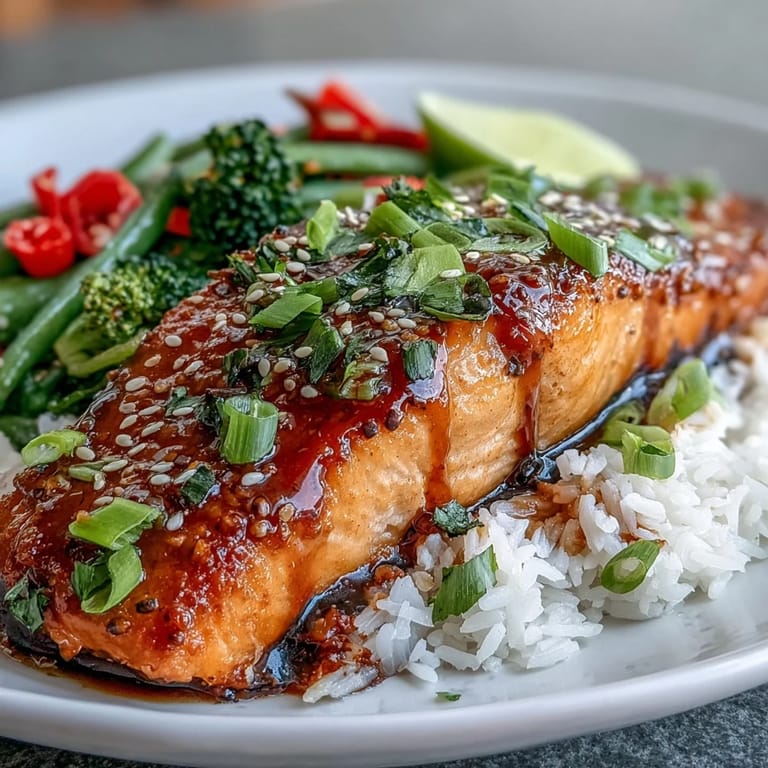
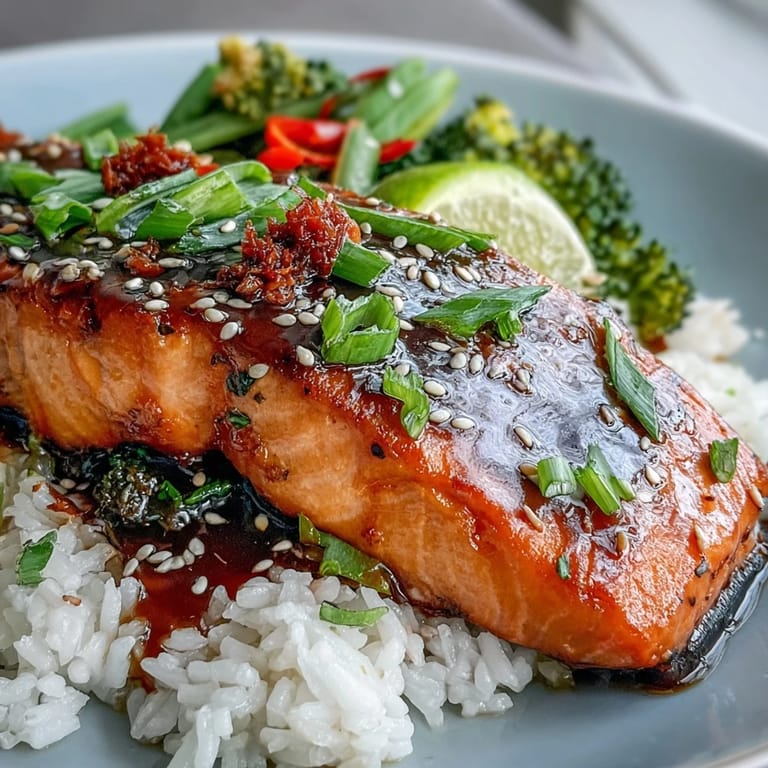
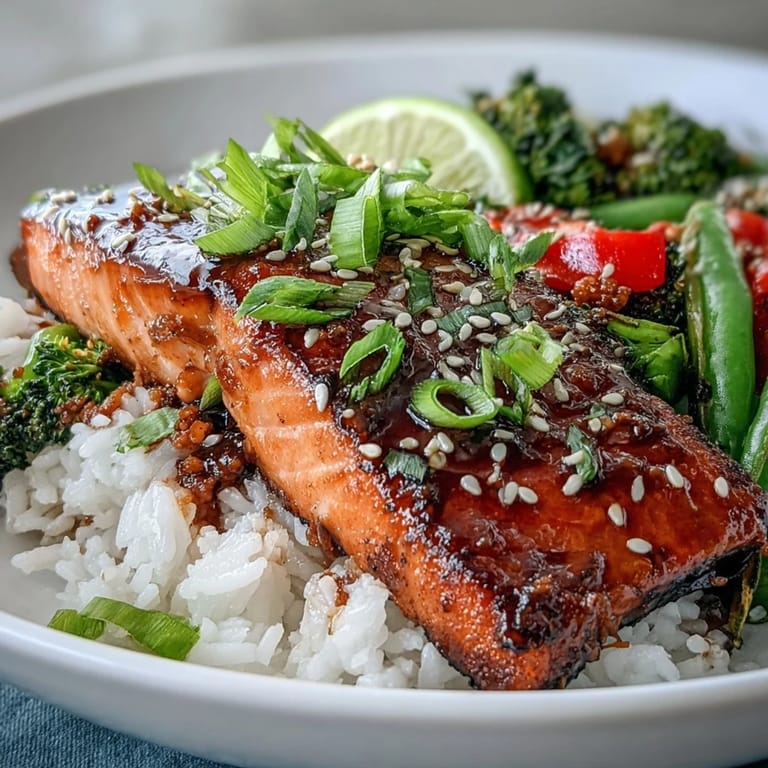
- Flip the salmon, pour the glaze over it, and cook for 3 to 4 minutes while spooning the glaze over the fish repeatedly so it caramelizes and clings to the flesh. The salmon is done when it flakes easily with a fork and the glaze has thickened into something glossy and slightly tacky.
- Cook the vegetables:
- While the salmon finishes, steam or sauté the broccoli, snap peas, and bell pepper for 3 to 4 minutes until they're crisp-tender with a bit of bite. Season lightly with salt.
- Assemble and serve:
- Divide the fluffy rice among bowls, top with the sautéed vegetables and a glazed salmon fillet, then drizzle any extra glaze from the pan over everything. Garnish generously with green onions, toasted sesame seeds, and a lime wedge on the side.
 Save
Save There's something almost meditative about spooning that glossy glaze over the salmon as it cooks, watching it transform from a thin liquid into something rich and clinging. It's the kind of moment that reminds you why cooking for people you care about matters, even when everything else in life feels rushed.
Why This Works as a Weeknight Dinner
The beauty of this recipe is that every component cooks on its own timeline, so you're not juggling ten things at once. Your rice starts first and chugs along quietly while you mix the glaze and get your vegetables prepped, then salmon and vegetables hit the heat in the final minutes. By the time you're setting the table, everything comes together at exactly the same moment, which feels like you've orchestrated something far more complicated than you actually have.
Playing with Flavor
The maple-soy combination is my baseline, but I've learned that this glaze is incredibly flexible depending on what you're craving. Sometimes I add a pinch of red pepper flakes for heat, or swap the maple for honey when I want something slightly less sweet. One night I added a splash of orange juice for brightness, and now that's become another favorite version I rotate through.
Making It Your Own
Once you understand how the glaze works, you can swap vegetables based on what's in your fridge or what's on sale that week. Asparagus, carrots, bok choy, and green beans all cook in roughly the same time and taste wonderful with this glaze. The salmon is the star, so keep that consistent, but everything else is your canvas.
- If you have fish sauce on hand, a tiny splash adds a savory depth that's almost impossible to describe but absolutely transforms the glaze.
- Cook the vegetables in the same skillet after the salmon if you're trying to minimize cleanup, just wipe it out quickly and let the browned bits add extra flavor.
- Leftovers are fantastic over salad the next day or tucked into rice bowls with extra vegetables, so don't hesitate to make extra.
 Save
Save This dish is proof that you don't need complicated techniques or rare ingredients to make something that tastes incredible. It's become my go-to reminder that weeknight cooking can be both fast and special.
Recipe Questions & Answers
- → Can I use other types of fish for this dish?
Yes, this glaze works beautifully with other fatty fish like rainbow trout, arctic char, or mackerel. Thinner fillets will cook faster, so adjust the cooking time accordingly to prevent overcooking.
- → What vegetables work best alongside the salmon?
Broccoli, snap peas, and red bell pepper provide excellent color and crunch. You can also use asparagus, sugar snap peas, carrots, or bok choy. Choose vegetables that cook quickly and maintain some texture when steamed or sautéed.
- → Can I make the glaze ahead of time?
Absolutely. Whisk the glaze ingredients together and store in an airtight container in the refrigerator for up to a week. Let it come to room temperature before using, and give it a quick whisk as the sesame oil may solidify when cold.
- → How do I know when the salmon is perfectly cooked?
The salmon is done when it flakes easily with a fork and reaches an internal temperature of 145°F (63°C). The flesh should turn from translucent to opaque and spring back when gently pressed. Avoid overcooking to keep the fish moist and tender.
- → Is there a substitute for maple syrup?
Honey makes an excellent substitute, providing similar sweetness and viscosity. Brown rice syrup or agave nectar also work, though you may need to adjust the quantities slightly as they have different sweetness levels.
- → Can I bake the salmon instead of pan-frying?
Yes, bake at 400°F (200°C) for 12-15 minutes, brushing with the glaze during the last few minutes of cooking. The glaze may not thicken as much as in a skillet, so you can reduce it separately on the stovetop if desired.