 Save
Save There's something almost meditative about watching salmon transform under heat, the flesh turning from translucent to opaque in just minutes. My first attempt at teriyaki salmon happened on a Tuesday evening when I was trying to impress someone who claimed they didn't eat fish, and somehow between the aromatic garlic-ginger sauce bubbling on the stove and the vegetables hitting the wok with that perfect sizzle, I created something that changed their mind entirely. It's become my go-to when I want to feel like I'm cooking something restaurant-quality without spending hours in the kitchen.
I made this for my coworker's birthday potluck once, and I was nervous because everyone there seemed to cook professionally or at least act like it. When she came back for seconds and asked for the recipe, I realized this dish has this quiet confidence about it—it doesn't need to be complicated to be genuinely delicious. That moment taught me that sometimes the best meals are the ones that taste effortless.
Ingredients
- Salmon fillets (4, about 150 g each): Skinless works fine, but keeping the skin on gives you a crispy textured contrast and helps the fillet stay intact during cooking.
- Soy sauce (60 ml): The foundation of your glaze—it brings saltiness and umami that nothing else quite replaces, though tamari works beautifully if you need gluten-free.
- Mirin (60 ml): This sweet rice wine is what makes the sauce silky and glossy rather than just salty; it's worth tracking down because it really does make a difference.
- Brown sugar (2 tbsp): Adds depth to the sweetness and helps caramelize the glaze slightly when it hits the hot pan.
- Rice vinegar (1 tbsp): A splash of acid that brightens everything and keeps the sauce from feeling too heavy.
- Sesame oil (2 tsp): A little goes a long way here—it's intense and aromatic, and using real sesame oil rather than a blend makes you taste the difference immediately.
- Garlic and ginger: Minced garlic and grated ginger create that warm, slightly spicy backdrop that makes teriyaki actually interesting instead of just sweet.
- Cornstarch slurry (1 tsp cornstarch plus 2 tsp water): This thickens the sauce so it clings to the salmon instead of sliding right off; mix it just before you use it.
- Bell pepper, carrot, broccoli, snap peas: Choose whatever vegetables are looking fresh at your market—the point is texture contrast, so aim for a mix of colors and crispness levels.
- Jasmine or sushi rice (300 g): Jasmine rice is slightly floral and holds up better than regular white rice; it's worth the small upgrade for this bowl.
- Sesame seeds and spring onions (optional garnishes): These feel optional until you taste how they add nutty crunch and sharp onion bite that elevates the entire bowl.
Tired of Takeout? 🥡
Get 10 meals you can make faster than delivery arrives. Seriously.
One email. No spam. Unsubscribe anytime.
Instructions
- Prepare your rice foundation:
- Rinse jasmine rice under cold water until the water runs almost clear, swishing it gently with your fingers—this removes excess starch so each grain stays separate. Combine rinsed rice with 450 ml water in a saucepan, bring to a boil over high heat, then immediately reduce to low, cover tightly, and let it simmer untouched for 15 minutes before removing from heat and letting it rest covered for another 5 minutes.
- Build the teriyaki magic:
- While rice simmers, combine soy sauce, mirin, brown sugar, rice vinegar, sesame oil, minced garlic, and grated ginger in a small saucepan over medium heat, stirring occasionally until the sugar dissolves and everything smells warm and deeply savory. Just before you're ready to use it, stir in your cornstarch slurry and cook for another minute or two until the sauce thickens into a glossy glaze that coats the back of a spoon.
- Sear the salmon with confidence:
- Pat salmon fillets dry with paper towels and season both sides generously with salt and pepper, then place them skin-side down in a nonstick skillet over medium-high heat with just a splash of oil, letting them sit undisturbed for 3-4 minutes until the skin crisps up. Flip carefully and cook the other side for 2-3 minutes until the flesh is just opaque throughout but still feels slightly yielding when you press it gently.
- Give salmon its glossy finish:
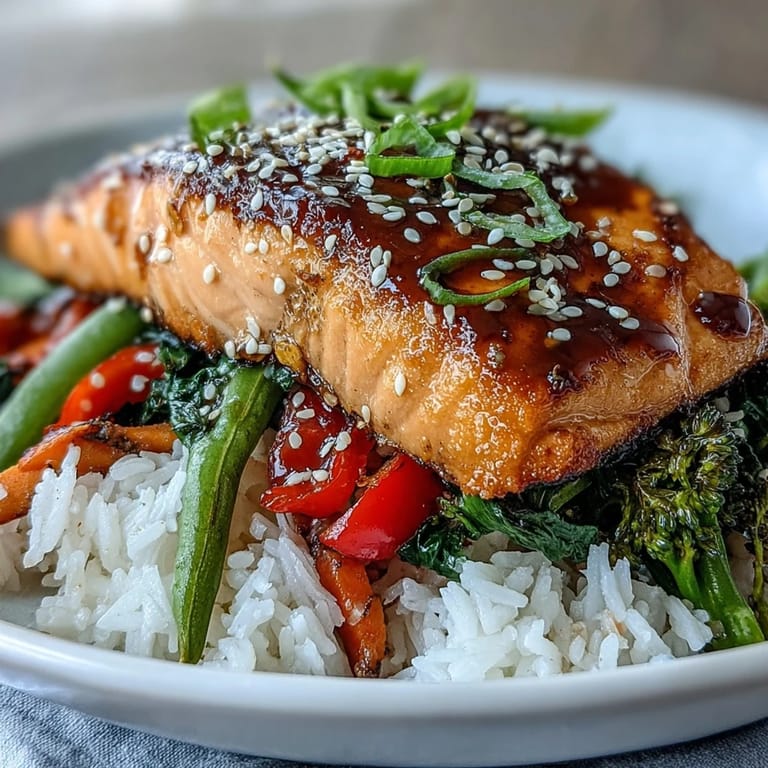
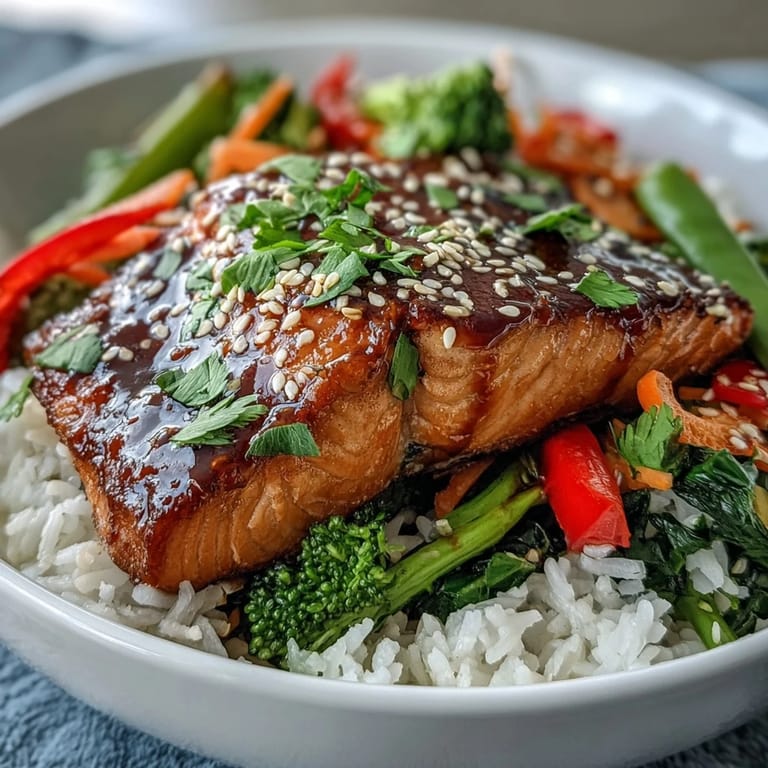
- Brush each cooked salmon fillet generously with your teriyaki sauce and let it cook for just 1 minute more, letting the glaze caramelize slightly and coat the fish in that gorgeous lacquered appearance. Transfer to a plate and set aside while you finish the vegetables.
- Stir-fry vegetables until they're singing:
- Heat vegetable oil in a wok or large skillet over high heat until it shimmers, then add bell pepper and carrot first since they take slightly longer, followed by broccoli and snap peas after about a minute. Toss everything constantly for 3-4 minutes total until the vegetables are tender but still have a satisfying snap when you bite into them—you want color and crunch, not mush.
- Compose your bowls like you mean it:
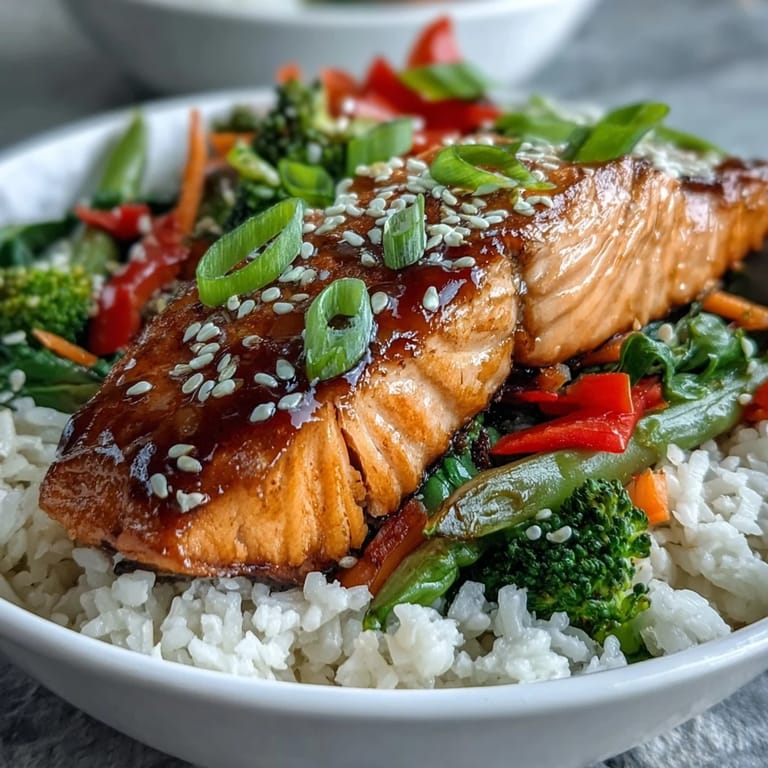
- Divide fluffy rice evenly among four bowls, top with a tangle of stir-fried vegetables, then crown each bowl with a teriyaki-glazed salmon fillet. Drizzle extra sauce over everything, scatter sesame seeds across the top, and finish with sliced spring onions for color and a sharp onion bite that ties the whole thing together.
 Save
Save Last winter, I made this bowl on a cold Saturday afternoon while my partner was working, and I sat by the window eating it slowly, watching snow accumulate outside. It was one of those quiet meals that felt almost decadent because of how complete it was—protein, vegetables, grains, and a sauce that made every element taste intentional.
The Teriyaki Sauce Philosophy
I used to think teriyaki was just a bottled condiment until I made it from scratch and realized how much personality lives in those four liquid components working together. The beauty is that you can taste what each ingredient contributes—the soy brings salt and umami, the mirin brings sweetness and shine, the vinegar keeps it from becoming cloying, and the sesame oil adds this toasted, almost nutty backbone. Once you understand that balance, you can adjust it to your own preferences, and suddenly you're not just following a recipe, you're actually cooking.
Salmon Without the Nervousness
Fish intimidates a lot of people, but salmon is actually one of the most forgiving proteins you can cook because its fat content means it stays moist and tender even if you're slightly off on timing. The key is patting it completely dry before it hits the pan and not poking at it while it cooks—let the heat do the work, and you'll get that beautiful crust on the skin while the inside stays buttery. I always remember that salmon will continue cooking slightly after you remove it from heat, so it's better to pull it off when it looks almost done rather than when it's already looking opaque all the way through.
Vegetables as Your Canvas
The vegetable combination here is just a suggestion, and honestly, that's what makes this recipe so useful—you can build it around whatever looked good at the market that week. In spring I use asparagus and snap peas, in summer I add zucchini and bok choy, in fall I throw in mushrooms and baby corn, and in winter I lean on broccoli and carrots because they're reliable. The real technique is getting your pan screaming hot, moving everything constantly so nothing sits long enough to steam, and stopping just when you feel like you could cook it one more minute—that's when it's actually perfect.
- High heat and constant motion are what give vegetables that restaurant-quality texture you're actually trying to achieve.
- Add vegetables in stages based on how long they need—dense vegetables first, delicate ones toward the end.
- If your vegetables release water while cooking, pour it off immediately so they fry instead of steam.
 Save
Save This bowl has become my answer to the question 'What should I cook?' on nights when I want something that feels special without requiring special skills. It's honest food that makes you feel like you've accomplished something in the kitchen.
Recipe Questions & Answers
- → What vegetables work best in this bowl?
Bell peppers, carrots, broccoli, and sugar snap peas provide excellent texture and color contrast. Feel free to substitute seasonal vegetables like zucchini, mushrooms, baby corn, or snow peas based on preference and availability.
- → Can I use other types of fish?
While salmon works beautifully with teriyaki glaze, you can substitute other firm fish fillets like cod, halibut, sea bass, or mahi-mahi. Adjust cooking time slightly based on thickness of the fillets.
- → How do I store leftovers?
Store components separately in airtight containers in the refrigerator for up to 3 days. Reheat rice and vegetables in the microwave, and gently warm the salmon to avoid overcooking. The teriyaki sauce keeps well for a week when refrigerated.
- → Is this suitable for meal prep?
Absolutely. Portion the cooked rice, vegetables, and salmon into separate containers. The teriyaki sauce can be stored in small jars for easy drizzling when reheating. Assembly takes just minutes when you're ready to eat.
- → Can I make the teriyaki sauce ahead?
Yes, prepare the teriyaki sauce up to one week in advance and store it in the refrigerator. The flavors actually meld and improve over time. Reheat gently before using, adding a splash of water if it thickens too much.
- → What rice varieties work well?
Jasmine and sushi rice are traditional choices that complement the Japanese-inspired flavors. Short-grain brown rice or quinoa also work beautifully if you prefer whole grains with a nuttier texture.