 Save
Save Last October, my kitchen smelled like caramelized squash for three days straight, and I didn't mind one bit. A friend had stopped by with a bag of butternut squash from the farmer's market, and instead of the usual roasted side dish routine, I wondered what would happen if I let those sweet cubes get seriously golden in the oven alongside some broccoli. The result was so unexpectedly velvety and comforting that I've made this soup at least once a month ever since.
I made this soup for my sister's book club last spring, and watching everyone go back for seconds while debating the plot of their current read made me realize how food quietly brings people together. She still texts me asking for the recipe whenever the weather turns cool.
Ingredients
- Butternut squash (1 medium, about 2 lbs): This is your creamy base, and roasting it brings out natural sweetness that balances the earthiness of the broccoli beautifully.
- Broccoli (1 large head, about 4 cups florets): Don't skip the stems if they're tender, they add body to the soup and roast into something almost nutty.
- Yellow onion (1 medium, chopped): Gets soft and jammy in the oven, adding subtle sweetness that rounds out the whole bowl.
- Garlic (3 cloves): Roasted garlic is impossibly mild and creamy, nothing like raw garlic's bite.
- Vegetable broth (4 cups): Use a quality broth you'd actually drink on its own, it makes a real difference in the final flavor.
- Coconut milk or heavy cream (1 cup): This is your richness factor, and either choice works depending on how you're feeling and who you're feeding.
- Olive oil (2 tablespoons): Helps everything roast evenly and develop those caramelized edges we're after.
- Kosher salt and black pepper: Start with what the recipe suggests but trust your taste buds to fine-tune at the end.
- Ground cumin and nutmeg: These warm spices are subtle but essential, cumin adds a gentle earthiness and nutmeg gives the sweetness somewhere to land.
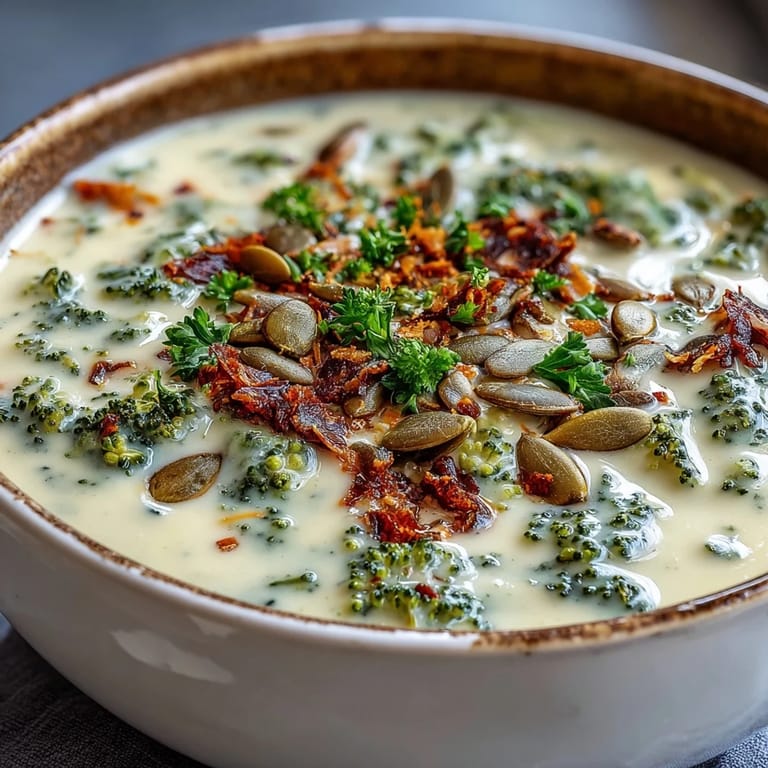
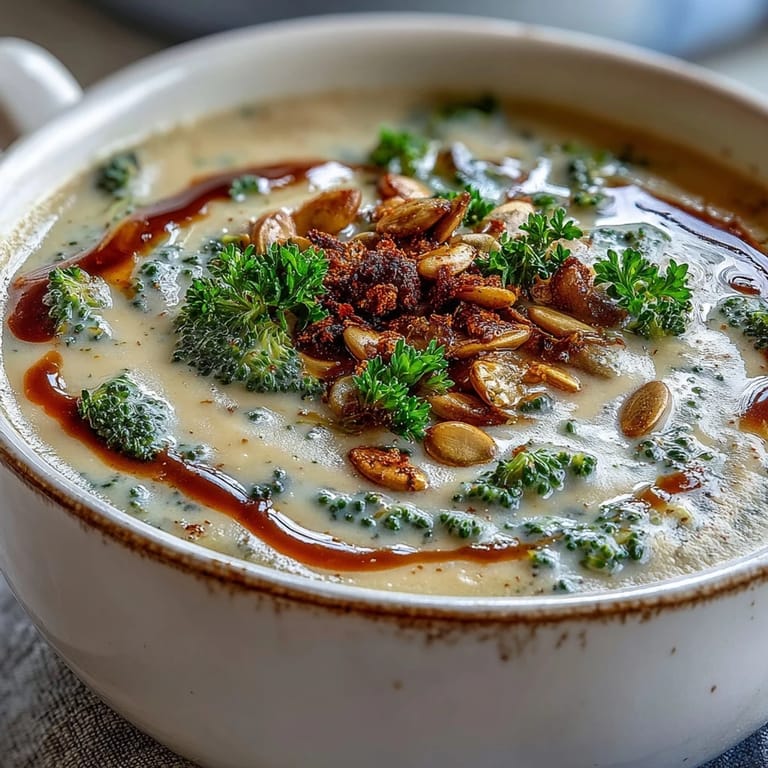
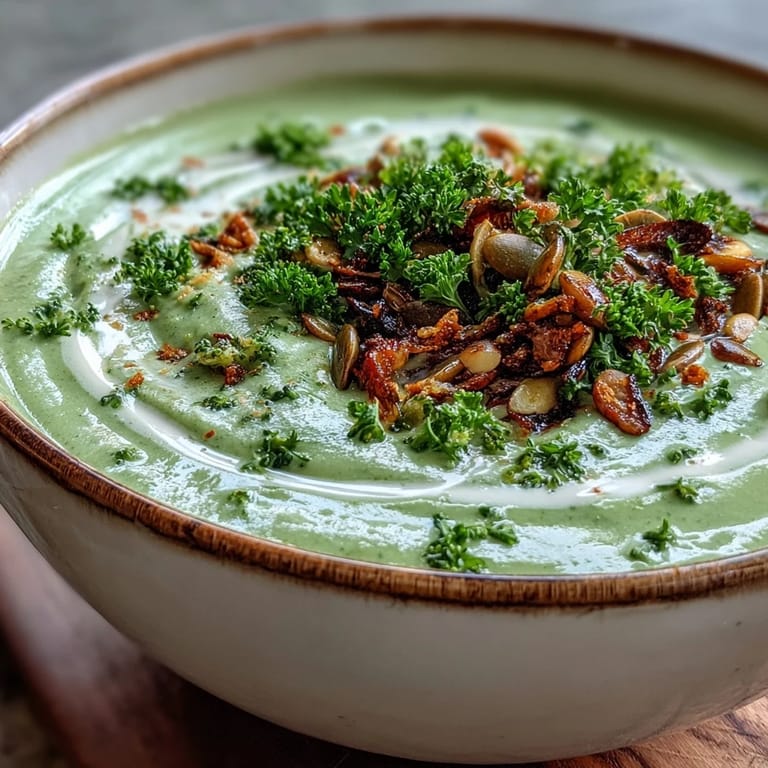
- Optional garnishes (pumpkin seeds, parsley, cream drizzle): These aren't fancy touches, they're textural partners that make each spoonful more interesting.
Tired of Takeout? 🥡
Get 10 meals you can make faster than delivery arrives. Seriously.
One email. No spam. Unsubscribe anytime.
Instructions
- Get your oven ready and prep the vegetables:
- Preheat to 425°F and line a baking sheet with parchment paper. Cut your squash into roughly one-inch cubes and break your broccoli into florets, chop your onion into bite-sized pieces, and leave garlic cloves whole.
- Toss everything with oil and seasonings:
- Spread all your vegetables on the baking sheet, drizzle with olive oil, then sprinkle with salt, pepper, and cumin. Toss with your hands until everything glistens and is evenly coated.
- Let them roast and caramelize:
- Roast for 25 to 30 minutes, stirring halfway through, until the squash is tender and the edges are deeply golden brown. You'll know it's ready when your kitchen smells like autumn and a fork slides through the squash effortlessly.
- Build your soup base:
- Transfer the roasted vegetables to a large pot, pour in your vegetable broth, and bring everything to a gentle simmer over medium heat. Let it bubble quietly for about 10 minutes so the flavors can get to know each other.
- Blend until silky:
- Take the pot off the heat and use an immersion blender to puree everything into smooth creaminess, working it from bottom to top. If you're using a countertop blender, work carefully in batches so you don't create a hot vegetable volcano.
- Finish with cream and spices:
- Stir in your coconut milk or cream and add the nutmeg, which brings a subtle warmth to everything. Taste and adjust the salt and pepper, remembering that you can always add more but you can't take it back.
- Serve warm and gorgeous:
- Reheat gently if needed, then ladle into bowls and top with whatever garnishes appeal to you. A scatter of pumpkin seeds and fresh parsley adds life and crunch to every spoonful.
 Save
Save There's something grounding about the moment when you press that blender button and watch all those roasted pieces transform into something entirely new. My neighbor could smell it through our shared wall and showed up at my door with two bowls worth of appetite, which is exactly the kind of approval this soup deserves.
Why Roasting Changes Everything
The roasting step isn't just a technique, it's the difference between a vegetable soup and something that tastes like you've unlocked a secret. When squash and broccoli hit a hot oven, their natural sugars caramelize and concentrate, building depth that you simply cannot achieve by simmering raw vegetables in broth. I learned this the hard way after attempting this soup by skipping ahead and dumping raw vegetables straight into the pot, which resulted in something tasty but somehow one-dimensional. Now I'm patient with the roasting, knowing those 30 minutes are doing all the heavy lifting.
Flexibility Is Your Friend Here
This soup is remarkably forgiving about substitutions and personal preferences, which is probably why it's become such a staple in my rotation. Sweet potato works beautifully in place of butternut squash if that's what you have, and I've added cauliflower florets alongside the broccoli when I was trying to use up the crisper drawer. The cream versus coconut milk choice is genuinely your call depending on dietary preferences or what's already in your kitchen, and I've made it both ways with completely different but equally satisfying results.
Small Tweaks for Different Moods
Sometimes you want this soup exactly as written, warm and comforting and nothing more. Other times you might crave a squeeze of fresh lemon juice stirred in at the end, which brightens everything unexpectedly and cuts through the richness in the best way. A pinch of cayenne pepper wakes up the whole bowl if you're in the mood for subtle heat, and I once added a tablespoon of soy sauce on a whim and never looked back, though it ventures into savory territory that some might find surprising.
- A squeeze of fresh lemon added after blending brings brightness that makes the whole soup taste alive.
- Serve alongside crusty bread or gluten-free toast for soaking up every last spoonful of comfort.
- This soup freezes beautifully for up to three months, so make extra when you have the time and thank yourself later.
 Save
Save This soup has become one of those recipes I reach for without thinking, the kind that feels like a hug in a bowl. Make it once and it'll probably find its way onto your table again and again.
Recipe Questions & Answers
- → Can I make this soup ahead of time?
Yes, this soup stores well in the refrigerator for up to 4 days. Reheat gently on the stovetop, adding a splash of broth if needed to adjust consistency. You can also freeze it for up to 3 months in airtight containers.
- → What can I substitute for butternut squash?
Sweet potato works beautifully as a substitute and offers a similar creamy texture and natural sweetness. You can also use kabocha squash or pumpkin. Adjust roasting time based on the vegetable's density.
- → How do I make this soup creamier?
For extra creaminess, use heavy cream instead of coconut milk, or add a dollop of sour cream when serving. You can also increase the coconut milk to 1.5 cups or add a few tablespoons of cashew cream.
- → Can I use frozen broccoli and squash?
Yes, but fresh vegetables yield better flavor when roasted. If using frozen, thaw and pat dry before roasting, and expect slightly less caramelization. You may need to reduce roasting time by 5-10 minutes.
- → What should I serve with this soup?
This soup pairs wonderfully with crusty bread, garlic toast, or a fresh green salad. For a heartier meal, serve with grilled cheese sandwiches or a quinoa salad. Topped with toasted pumpkin seeds, it's satisfying on its own.
- → How can I add more protein to this soup?
Stir in cooked white beans or chickpeas for plant-based protein, or top with grilled chicken for a non-vegetarian option. You can also garnish with hemp seeds or serve alongside a protein-rich side dish.