 Save
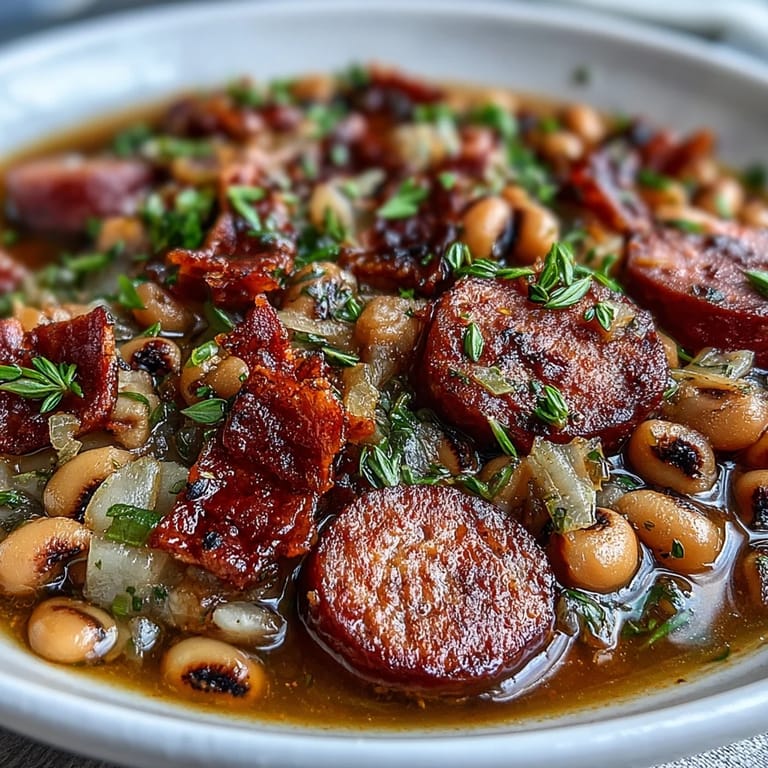
Save My grandmother used to say that black-eyed peas on New Year's Day weren't just tradition—they were insurance, a way of inviting luck into the kitchen and, by extension, into the whole year ahead. The first time I made them without her hovering nearby, I burned the bacon, forgot to soak the peas overnight, and nearly gave up before noon. But something about the smell of smoked sausage and celery simmering together pulled me back, and by evening, I understood what she meant. This recipe isn't complicated, but it carries weight—the kind of comfort food that tastes like it's been made in someone's home a thousand times.
I made this for my neighbors one January when they'd just moved down from the North, and they'd never had black-eyed peas before. Their skepticism melted the moment they tasted it—something about how the spices wrapped around each bite, how the peas stayed creamy but held their shape. We ended up eating three bowls each and talking until the pot was nearly empty. That's when I knew this wasn't just a recipe; it was a conversation starter, a way of saying welcome without needing many words.
Ingredients
- Smoked sausage (Andouille or Kielbasa), 225 g: This is where the soul of the dish lives—it gives you a deep, peppery smokiness that can't be rushed or replaced with something mild.
- Thick-cut bacon, 115 g: Don't skimp on quality here; you're building a fond at the bottom of the pot that becomes liquid gold for the broth.
- Dried black-eyed peas, 450 g: Rinse and sort them carefully before soaking—a tiny stone or shriveled pea hiding in the batch will remind you why this step matters.
- Onion, 1 large: Dice it fine so it melts into the broth and becomes part of the backbone of flavor rather than staying as distinct pieces.
- Green bell pepper, 1: This adds a subtle brightness that keeps the dish from tasting too heavy, even though you're building with rich meats.
- Celery stalks, 2: Along with the onion and pepper, this is your holy trinity, the aromatic base that makes every spoonful taste intentional.
- Garlic cloves, 3: Mince them fine and add them after the softer vegetables so they don't burn and turn bitter on you.
- Low-sodium chicken broth, 1.5 liters: Low-sodium lets you control the saltiness as the broth reduces and the flavors concentrate.
- Water, 240 ml: This tempers the broth and gives the peas room to absorb liquid without becoming overwhelmingly salty.
- Bay leaves, 2: They sit quietly in the pot, whispering eucalyptus and earth into every bite—remember to fish them out before serving.
- Smoked paprika, 1 tsp: This is non-negotiable; it's what makes the dish taste Southern and smoky without adding more meat.
- Dried thyme, 1/2 tsp: A whisper of herb that ties everything together without overpowering the other flavors.
- Cayenne pepper, 1/2 tsp (optional): Add this only if you like heat; it builds gradually, so taste as you go.
- Freshly ground black pepper, 1/2 tsp: Grind it just before cooking so you get the full bloom of its peppery warmth.
- Kosher salt, 3/4 tsp (plus more to taste): Start conservative—you can always add more, but you can't take it out.
- Fresh parsley, 2 tbsp: Chop it just before serving so it keeps its bright color and fresh taste against the rich, dark peas.
- Hot sauce, to serve: This is personal preference, but a bottle nearby gives everyone the chance to adjust the heat to their liking.
Tired of Takeout? 🥡
Get 10 meals you can make faster than delivery arrives. Seriously.
One email. No spam. Unsubscribe anytime.
Instructions
- Prepare the peas the night before (or use the quick method):
- If you're thinking ahead, soak the rinsed and sorted peas in cold water overnight—they'll cook faster and more evenly. If you're short on time, cover them with boiling water, let them sit for an hour, then drain and rinse; they won't be quite as tender, but they'll still be good.
- Render the bacon until it's crispy:
- In a large Dutch oven or heavy pot, cook the diced bacon over medium heat, stirring occasionally, until the edges curl and the fat turns golden. Listen for the sizzle to deepen into a steady crackle, then remove the bacon with a slotted spoon and set it aside on a paper towel.
- Brown the sausage in the bacon fat:
- Without washing the pot, add the sliced sausage to the warm fat left behind and let it sear on both sides until the edges brown and the smoky smell fills your kitchen. This takes about 5-7 minutes; you're looking for color, not just cooked-through. Remove it and set it aside with the bacon.
- Soften the aromatics gently:
- Add the diced onion, green bell pepper, and celery to the same pot, stirring occasionally until the vegetables soften and lose their raw edges, about 5-6 minutes. You should be able to smell the onion sweetening and the celery becoming tender. Add the minced garlic and cook for another minute, just until fragrant but not brown.
- Combine everything and bring it to a boil:
- Stir in the soaked and drained peas, chicken broth, water, bay leaves, smoked paprika, thyme, cayenne (if you're using it), black pepper, and salt. Return the cooked bacon and sausage to the pot and stir well so nothing sticks to the bottom. Bring the whole thing to a rolling boil—you'll see the steam rise and the surface bubble actively.
- Simmer low and slow until the peas are creamy:
- Once it boils, reduce the heat to low, cover the pot, and let it bubble gently for 1 to 1.5 hours. The peas will soften gradually, and the broth will darken and deepen. Check after the first hour; if the peas still feel firm and chalky inside, give them another 15-30 minutes. When they're done, they should break easily between your tongue and the roof of your mouth.
- Taste, adjust, and finish:
- Remove the bay leaves carefully, then taste a spoonful of broth and a few peas together. Add more salt if needed, more cayenne if it needs heat. Sprinkle fresh parsley over the top just before serving so it stays bright green and doesn't wilt from the heat.
- Serve hot with sides and hot sauce on the side:
- Ladle the peas and broth into bowls, and set out hot sauce so everyone can add as much heat as they want. Traditionally this goes over steamed rice or alongside a wedge of cornbread.
 Save
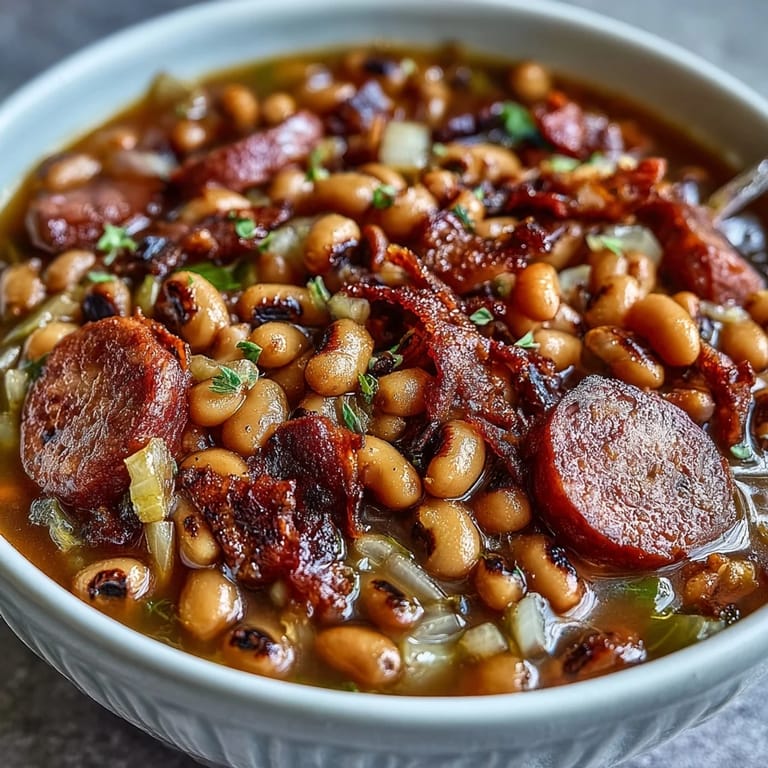
Save One winter evening, my daughter came home from school tired and quiet, and I had a pot of these peas simmering on the stove. The moment she walked in, her shoulders dropped, and she sat at the kitchen table without being asked. We didn't talk much, but she ate three bowls, and by the time she finished, she was smiling again. That's when I realized this dish does what food is supposed to do—it wraps you up and reminds you that you're home.
Building Flavor, One Layer at a Time
The key to these peas isn't any single ingredient—it's the order and patience with which you combine them. Starting with bacon and sausage creates a fond, a flavorful brown layer at the bottom of the pot that becomes the foundation of everything that follows. The vegetables soften into this base, and by the time you add the peas and broth, you've built something that tastes like it's been cooking for generations. Every element has a reason, and rushing through any step compromises the final result.
Stretching and Storing This Batch
Black-eyed peas are one of those rare dishes that actually improve the next day as the flavors settle and merge. Leftovers keep in the refrigerator for up to four days in a sealed container, and they freeze beautifully for up to three months if you store them in a freezer-safe vessel. Reheat gently on the stovetop with a splash of water or broth if the mixture has thickened too much, and you'll have a meal that tastes freshly made.
When You Want to Make It Your Own
This recipe is sturdy enough to accept variations without falling apart. Some people add a diced can of tomatoes near the end for brightness, or stir in collard greens for added nutrition and a peppery edge. Others replace the meat entirely with vegetable broth and extra smoked paprika or a few drops of liquid smoke to keep the depth intact. The beauty of black-eyed peas is that they're a blank canvas for whatever your kitchen has to offer.
- If you're vegetarian, add an extra half teaspoon of smoked paprika and a teaspoon of liquid smoke to replace the savory depth the meat provides.
- Collard greens or diced fresh tomatoes can be stirred in during the last 15 minutes of cooking without changing the overall timing.
- Serve alongside cornbread, steamed rice, or cooked greens—each combination creates a different meal from the same pot.
 Save
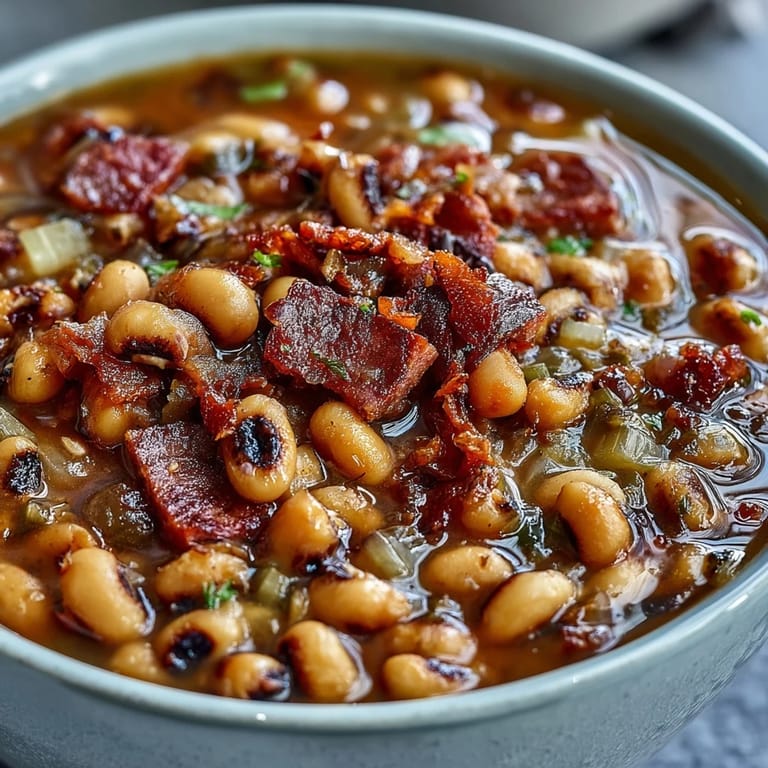
Save These black-eyed peas aren't just food—they're a small ritual, a way of saying that you believe in luck and comfort and the power of sitting down together. Make them when you need that kind of magic.
Recipe Questions & Answers
- → Do I need to soak the black-eyed peas?
Yes, dried black-eyed peas require overnight soaking for even cooking. Alternatively, use the quick soak method by covering with boiling water for one hour. This ensures tender, creamy results.
- → Can I make this vegetarian?
Absolutely. Omit the bacon and sausage, substituting vegetable broth for chicken broth. Add extra smoked paprika or a few drops of liquid smoke to maintain that savory depth.
- → What's traditionally served with black-eyed peas?
Steamed rice and cornbread are classic accompaniments. Sautéed collard greens or mustard greens make perfect sides. Iced tea or a crisp white wine complement the rich flavors beautifully.
- → How long will these keep in the refrigerator?
Store in an airtight container for up to five days. The flavors actually deepen and improve after a day or two. Reheat gently, adding a splash of broth or water if needed.
- → Can I freeze leftovers?
Yes, freeze cooled portions in freezer-safe containers for up to three months. Thaw overnight in the refrigerator before reheating. The texture remains excellent after freezing.
- → Why are black-eyed peas eaten on New Year's?
Southern tradition holds that black-eyed peas bring prosperity and luck for the coming year. Their coin-like appearance when cooked symbolizes wealth, while their abundance represents hope for plenty.